You’re “spiritual, not religious.” You sort of believe in God, “But not a man with a beard on a throne.” (You always say that. Pretty much everyone always says that.) Maybe you’re a cultural Jew or Christian or Muslim, just not observant, or you’ll laugh and say you’re a “recovering Catholic.” You used to go to church, but now you see that they are just full of hypocrites. You affirm, as if for the first time, that religion has been a constant cause of conflict and suffering in the world— you know, Crusades and witch burnings and the Inquisition and all that — so the hell with it.
Maybe you believe, as it was said by Pascal or Voltaire or Mark Twain (take your pick), “God made man in his own image, and man has returned the compliment.” They seem to have been talking more broadly about the institutionally-approved characterizations of God that have ruled for so long: God is fundamentally a powerful, power-hungry masculine entity that wants your devotion and your money. But these days, more and more people assert that they have a personal concept of God — a God they bespoke, if you will — that doesn’t fit any of the currently available religious categories.

Perhaps people develop concepts of God based, not on cultural traditions, or theological study, or philosophical critical thinking, but on their own natures. We don’t look to the “wisdom of the ages,” (that is, the narratives constructed during the ages when there was no internet and, therefore, no FB notifications). Instead, many today believe that each human’s unique brain chemistry creates their notions of God. But while each brain is unique, we also know that our personalities and proclivities fall into loose categories. We may be unique, but we are not special.

So what is your “personal God” like?
Well, what kind of person are you? Let’s look at some broad generalizations.
Recovering addicts often put it this way: “There is a God, and you’re not it.” This pithy theology-in-a-nutshell statement brings enormous relief to anyone who is trying to put their own issues into perspective; to get out from being the center of their own universe and connect with others for the first time. It may not actually describe God, but it’s refreshing.
Joiners and humanists, even agnostics or atheists, will tell you they go to church “for the Sense of Community.” They have a 9 x 12 baking pan, WITH a carrying case, and they’re not afraid to use it. Congregational potlucks are the only times they ever get to make that cheese-and-hash-brown casserole, and congregational board meetings are the only time they get to feel important. So perhaps their Bespoke God is something like the affable host of a giant cocktail party, or maybe a cosmic MeetUp app. But if you ask them to describe their version of God, they will probably give you the “not-a-bearded- man-on-a-throne” disclaimer and quickly change the subject.
Contrarians will argue and say, “There is no God, asshat.” But if YOU say there is no God, they will counter with, “You can’t prove a negative, asshat.” Either way, you’re an asshat.
Classic movie buffs will say, “There is no God. There is only Zuul.”
Trendspotters will smile with eyes wide and say, “There is a God, and it’s You and Me and All of us! I grok that WE are God!” (Never mind that they still can’t stand their mother-in-law and would poison her in a heartbeat.) Then they say, “Namaste,” which they gaily appropriated from the Hindus when they bought their toxic but fashionable $100 yoga pants. In the wild, they may have a “coexist” bumper sticker on their car.
Narcissists believe they ARE God and don’t even think they need to assert it. They just take it for granted you’ll agree. They are miffed if you do not admire them above all others. They will probably never be in recovery.
People with a bit of paranoia in their makeup may secretly believe in a God Who finds them and persecutes them, no matter how hard they try to hide. It’s possible they are not wrong.
Depressed people wish there was a God, or they believe there is a God, but they can’t seem to connect with that God. They want to, but they Just. Can’t. Even. They may believe there is a God somewhere else, but obviously not for the likes of them. Does being “religious” help prevent depression? Probably not. Which is also pretty damned depressing.
Bipolar people passionately believe in a glorious, indescribable God who surrounds them with mystical meaning and energy. They believe this thoroughly! Until they don’t! (Just as thoroughly.) Then, God is a only a myth from the ancient past when there was joy in the world, but not now. Now everything’s hopeless and God is desiccated and dead and life sucks. But look! Here comes God again! That wacky old God, She’s hard to keep up with!

Psychopaths absolutely believe in God because they know how useful God is in bringing victims to heel. For their own profit, power, or glory, they weaponize the religious urges of people in congregations, denominations, and even whole nations at a time. What is their God’s name? What do you want it to be?
I don’t know what people on the autistic spectrum believe. But I bet it’s awesome.
Those who partake in hallucinogens believe in God because the right drugs let the God loose in their own heads and their thinking is transformed. Nobody else sees the God, though, until they, too, do the right drugs. And it has to be the right drugs; only some of them have the God in them. Others don’t. No one knows why.
Life as a None
But let’s say you have made the next logical step and rejected any of those man-made God notions, and all those clumsy categories that don’t fit. Now, you are one of the growing numbers who report their religious affiliation as “nothing in particular.” You have become, in religious survey language, a “None.”
I get that. That’s cool. Shaking off the shackles of our Puritan history feels good. It liberates you from a lot of musty, prissy, irrelevant obligations. It frees up your Sundays. It lets you choose your own “community” instead of being forced to tolerate all the ignorant hypocrites you encounter in churches and such. Being a “none” lets you control your charitable giving better. (You’ll get to that later, right?)
But the “Nones” will probably not eventually control the world. It’s complicated, but it seems that, overall, lots of the Nones are older and less fertile in comparison with others around the globe. So, on the whole, they don’t seem to be making more kids, and when they do, they are not indoctrinating them properly at all. (Where are they going to drag their dwindling number of kids on a Sunday morning? Brunch? It’s just not the same, is it?)
So even though the number of “Nones” will grow in many parts of the world, and people will continue to enjoy their own private, personal Gods, their defection will hardly make a dent in the hard-line religious institutions worldwide. And it’s too bad, because many Nones have a clarity about their progressive beliefs that could actually be helpful, if they just weren’t so individualistic and hard to locate.
Good grief — I just caught myself nearly encouraging the Nones to join a church. That is not my intention, though I hastily add that if they do, they should look for a tolerant, inclusive congregation with an authentic prophetic voice, one that is working for the kind of social change many Nones say they believe in. But it’s beyond coincidence, how often a None will tentatively venture to a church, let’s say some flavor of Christian, only to come there on Stewardship Sunday and hear only an hour-long plea for money. There will be testimonials, and maybe a skit by the Youth Group, but it will all come across as religious clickbait, reinforcing the None’s cynical view of church at its worst. The None will not stay for “Coffee and Fellowship.”

Spiritual anarchists: unite. Please.
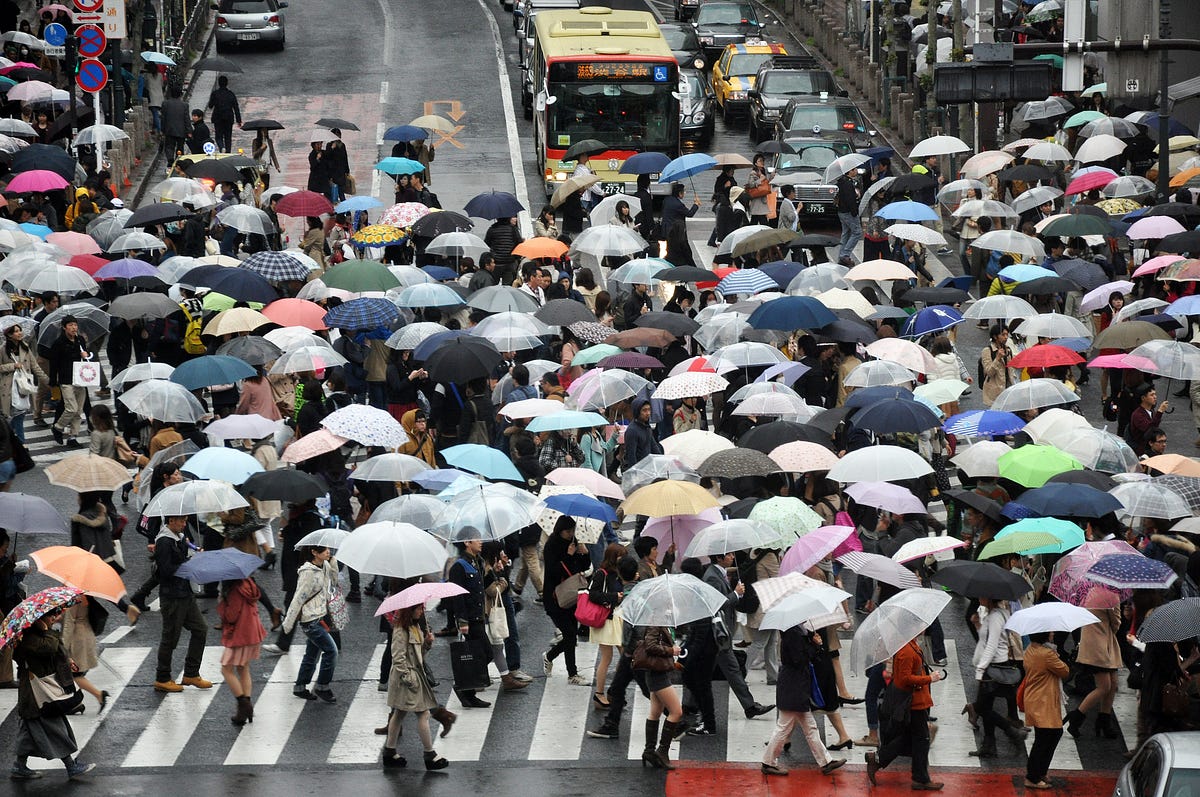
I don’t want the Nones to start conforming to somebody else’s idea of God or religious practice. I just wish there were a way to harness all that marvelous, independent creative thinking about the Ultimate into a force for good. There are a few churches and other organizations out there that don’t demand creedal conformity but do unite their members for action as well as spiritual growth. (Shout out to the Unitarian Universalists, a tiny denomination with an outsized impact on American history. They comprise only 0.2% of Americans, but 9.5% U.S. Presidents have been Unitarian Universalists.) There are other movements, like Sunday Assembly and Freethought, but they also appear to be small so far.
It would be marvelous if all these movements could coalesce, not merely coexist. I’d like to see a spiritual freedom movement that serves as an umbrella for all the Nones, and for the small and earnest communities that serve the Nones. It would be a spiritual movement with no creed, no tests of faith, no exclusion beyond basic rules of common decency (no murdering each other, for example). There would be NO improbable founding narrative to “believe in” — anyone would be free to imagine or appropriate any origin story they fancied. Its prophets would include people from all walks, so long as they were rooted in ideals of freedom, compassion, and justice. And then, perhaps, you Nones who are roughly 26% of the population in this country might actually be able to put your spirituality to the real test. For the one prophetic American voice in the liberal church, Hosea Ballou, this test was simple:
There is one inevitable criterion of judgment touching religious faith in doctrinal matters. Can you reduce it to practice? If not, have none of it.
Let’s get all the Nones together and save the world.
Then we’ll go to brunch.
 Rev Dr Sparky on Real/igion
Leave a comment