Sam Cooke wrote the song that begins with this line in 1960, and a procession of diverse artists have covered it since then. If you are from the right generation (the huge cohort that followed the “Greatest Generation” and thus were destined, by definition, to be inferior), then you have probably heard this song, and by now, I have probably successfully infected you with an earworm that will stay with you the better part of the day. That’s how songs work — they replicate themselves in your brain, without your willing it, and you’d better just hope you remember the whole song, or else you’ll be haunted by the scrap that you do recall. Here’s Sam Cooke’s original… And here’s a great cover. Yes, it’s a corny song. Enjoy.
I used to disdain this song because it seemed to celebrate ignorance. Why, if a man came to me proclaiming that he didn’t know history, biology, science, or a foreign language, I’d probably end the conversation long before he frankly admitted that he also didn’t know any trigonometry, algebra, or even geometry. Knowledge, I’ve always believed, is an ultimate good: the greatest thing in the world was to seek knowledge, and love did not make up for ignorance in my roster of desirable traits for humans.
After decades of striving to learn, I’ve achieved a state of genuine Socratic wisdom: I know now that I really know nothing.
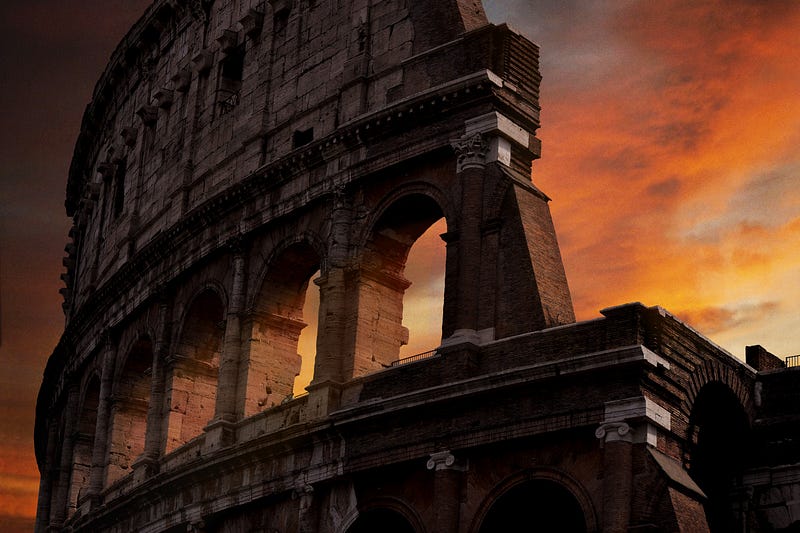
I don’t know history. Not only did I neglect reading historical accounts for too long, but I have now been told that those historical accounts represent a malleable construct, not a cause-and-effect timeline. That’s not how history works, I am told. Rather, “history” may not reflect actual events fixed in the past, because, in a commonplace attributed variously to Voltaire, Napoleon, Pliny the Elder, and George Orwell, history is typically “written by the winners.” So I can’t really know the past, and there is no TARDIS around to take me there for a fact check. Moreover, I am trying to make sense of conflicting narratives about past events at the very same time that present-day “truths” are being deconstructed and manipulated right before my eyes.
I don’t know much biology, either. I thought I did. I thought that, at least, I understood simple things like male and female differences. I could see the way those biological differences shaped culture, commerce, power, and identity, but I also believed that with my knowledge, I could transcend any backward notions that my biology was my destiny. Now, biology and social science are disrupting all my assumptions about how biology works. I am unsure what my life would have looked like had I not been born cisgender, straight, female. I don’t even know if I have yet learned the right terms for an identity that, when I started out, was simply “F”.
Science? Don’t know much about that, either. As with history, I came to be fascinated with science long after I had passed the peak years for learning things. I spent those peak years engaged with language, literature, art, music, drama, religion — basically, anything elective and not immediately useful. Now, I feel a chill at the back of my neck as I desperately try to learn enough science to understand what the hell is happening to our planet and what we should do about it.

So history shows me only shadows cast by the events of today; biology poses more questions than it answers; and science has surpassed the ability of most non-scientists to understand its advances and implications. And all I have to say about “the French I took” is that I learned enough to pass a qualifying reading exam but I could not talk to the taxi driver in Paris at all. So — no. I don’t know French. And even though the French have enabled me by learning English, I’m probably too embarrassed to go back there.
It’s not what you know. It’s who you know.
When I strip off the cynicism clinging to this aphorism, it leads me to the kinder notion expressed within the unpretentious chorus of this iconic song:
But I do know that I love you
And I know that if you love me too
What a wonderful world this would be
So even though I don’t know how anything works, can I at least look to love to make it all worthwhile? Can the love of one person for another make the world wonderful?
Of course not, I used to think. Just loving one person, depending on them for your happiness, is needy and codependent and doomed to be the subject of many other songs far less happy. But then I remember what I know about second-person pronouns and I realize, finally, that “you” can be plural. If we can say, “I love you” to all the “yous” we encounter, that changes this little song altogether.
Someone who knows they love people, and believes that they are worthy of being loved in return, is living in a wonderful world.
Even if they don’t know how it works. They just know it does.

 Rev Dr Sparky on Real/igion
Leave a comment