When Jack Preston King tagged me to list my Ten Most Influential Books, I was startled to realize that I had never made such a list before — not here; not on Goodreads; not on Facebook when I was on Facebook. Once in a while, I had the snarky urge to make a list of the “50 Books You Must Read or Else Die a Moron,” but I never got the nerve. But today, thanks to Jack, I get to think instead about the books that have shaped my life; changed the way I do things; changed me. I’ll be interested in your lists, too — I’ll wait before I tag individuals I am only now building relationships with, but… well, you know you want to. Just saying.
Naturally, I must reluctantly leave out many books that I’ve loved, read over and over, and recommended to friends. But the point is not to impress people with what avid readers we are (the most avid!) or how many books we’ve read (so many!). As I understand it, the point is to trace the marks those books left on our selves; our souls, if you will.
So… here is my list, complete with subtitles I have made up, for fun and in case this post is “tl/dnr” just now:
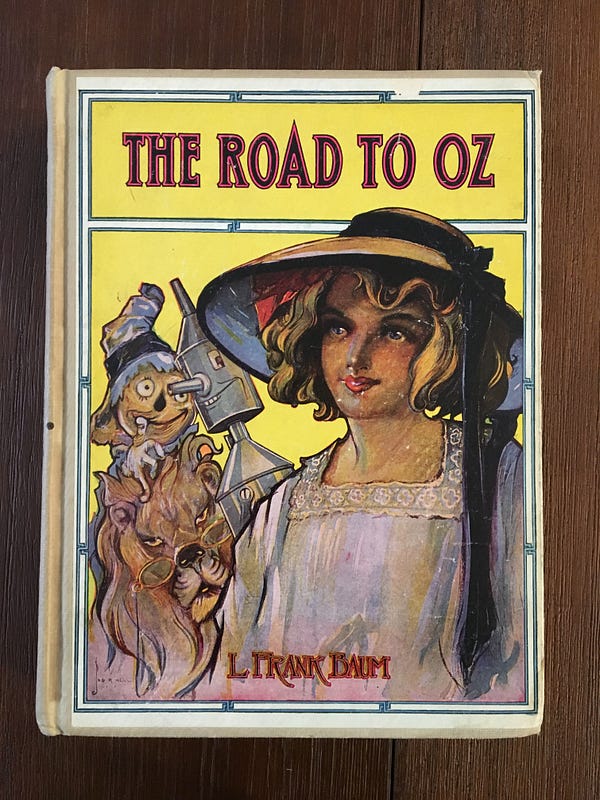
1. Dorothy and the Wizard of Oz, by L. Frank Baum.
Or, A Young Person’s Introduction to All the Worlds
Growing up in a hot, insular, southwestern suburb, where my Yankee birth ensured that I never fit in, my family were fortunate to be neighbors with a kind and idiosyncratic collector of books. He had an entire room full of beautiful old books , including early editions of L. Frank Baum’s Oz books. We children were not allowed to borrow them, but — perhaps even better — we were allowed to read them there, undisturbed in the cool, dim, quiet library, for as long as we wished (or until we were told to go home for supper).
Retreating from a chaotic household, I found the Oz books to be tiny windows onto a new universe. I eventually read them all and continued to gobble up fantasy and speculative fiction until — well, I’ll let you know when I stop. Hence, the Wizard of Oz books led me to a lifelong interest in fantasy adventures. More important, the experience of reading those books, in that safe space, taught me that books are sanctuary, and perhaps even salvation.
2 Little Women, by Louisa May Alcott
Or, Discovering the Subversive Divine Feminine
Perhaps it seems predictable that I loved this classic as a young girl. But it is on my list because all of Louisa May Alcott’s juvenile works had an outsized influence on my thinking and my character. Looking back, I recall that I responded, not only to the warm authentic voice of “The Children’s Friend,” but to the liberal, humane, and relatively tolerant New England values that voice expressed. I longed to live in New England, in Concord or at Walden, rather than in the intolerant town I found so puzzling and even unkind.
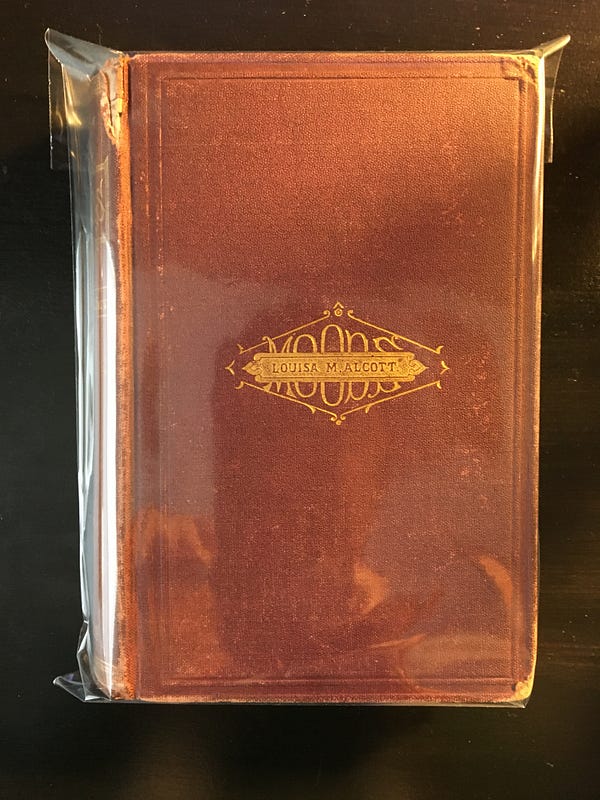
Later, I learned how Alcott and her family figured in the Transcendentalist movement, moving in the same circles as Emerson and Thoreau. Then, I discovered her adult novels — most significantly, Moods, which offers a startling literary depiction of a heroine who is surely bipolar, as I believe Alcott was, and as I happen to be (coincidence? I think not.) Still later, I wrote a dissertation using Alcott’s work as a subversive example of feminine theological language. Even though some may discount the literary value in Alcott’s popular works, her lasting influence on generations of young people — including me — cannot be denied. I dearly hope that her works will survive to benefit new generations.
3 Out of My Life and Thought, Albert Schweitzer
Or, How I Learned that the Real World Has Goodness In It Also
I don’t recall where I found Dr. Schweitzer’s memoir. It might have been on my parents’ shelves, or I may have found it in our local library, where we often went on a Saturday — another cool, dim sanctuary for me and our family. But the exotic tale that attracted me also accidentally taught me about a real person who did real, extraordinary things. Schweitzer’s humble account of his work in what was then French Equatorial Africa made him a hero in my young eyes, even though as an adult I am aware of ongoing critiques about the effectiveness or sensitivity of missions like his. But Schweitzer’s core affirmation remains vital to me: reverence for life. I am always seeking simple, essential principles, as a corrective to the tangles created by my thinking. Reverence for life is such a principle.
Except for bugs. I’m still working on bugs.

4 Dune, Frank Herbert
Or, A Fantasy Philosophy that Works in Real Life
Recall I triggered the addiction early with the Oz books, a well-known gateway drug to the hard stuff: fantasy, science fiction, speculative fiction. Of so many books in this genre, why do I call Dune, in particular, the most influential for me? At first thought, it’s because I found the Dune-universe to be the most rigorously constructed, complex, and uncompromising literary world I had encountered to date. Probing further, I recall reveling in Herbert’s explorations into the infinite ways of the mind. Most particularly, I realize that Herbert’s imagined Bene Gesserit sisterhood taught me a powerful technique to use against anxiety in the real world: The Litany Against Fear.
I have used this litany often, and it has shored up my courage against the world world I live in. Which can be as dangerous and scary as Arrakis, if you’re paying attention.
5 Night, by Elie Wiesel
Or, Coming to Terms with the Unimaginable
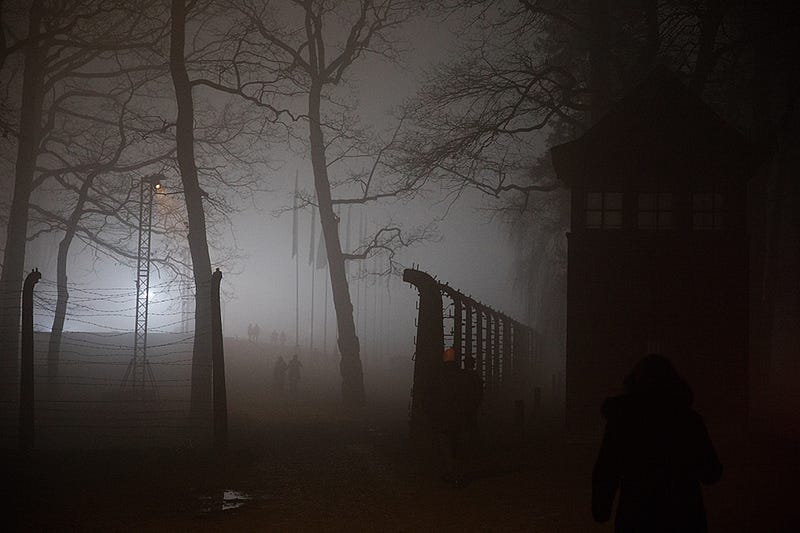
This slim volume and the others that accompany it strip away the rationalizations and the whitewashing and the political, moral, or religious prevarications with which “history” is usually taught. Walking through the night with Elie Wiesel, encountering the concentration camps of Nazi Germany, reveals a reality that most of us can scarcely imagine, let alone imagine surviving. And yet, survive he did.
For me, reading Night was an insufficient but necessary act of atonement. This astonishing narrative schools the reader in how to recognize evil in the world while, at the same time, it illuminates humanity’s capacity for love and redemption. Once we have truly seen evil, we cannot unsee it. And that is as it should be.
6 One Flew Over the Cuckoo’s Nest, by Ken Kesey
Or, How to Avoid Destruction by the Combine
Young, rebellious seekers with artistic pretensions often flirt with the idea that they have deep-seated madness within them. They hope, however, that it’s the cool kind of madness, singular and creative and pure. Too often, though, this yearning to be a misfit genius seems unfortunately self-aggrandizing while it delays necessary therapy. Reading Cuckoo’s Nest effectively rid me of any romantic desire to abandon self-discipline and restraint and become “mad, bad, and sad.” The “hero,” Randle McMurphy, lets his own wild energies go unchecked, betting he can escape confinement by the law and help his fellow patients regain their lust for life. Naively, he fails to realize in time that the ultimate control on behavior is not the law but the arbitrary and heartless way that society coerces conformity — what Chief Bromden calls The Combine. McMurphy loses his bet.
By contrast, Chief Bromden keeps his mouth firmly shut, listens, observes, and learns how to manage his fears and demons, until he sees his moment to burst the barred windows and get free. This book taught me it’s a better bet to be Chief Bromden. Hence, I am alive today, which I otherwise might not be. Now that’s an influential book.
7 The Chalice and the Blade, by Riane Eisler
Or, It Doesn’t Have to Be This Way
I confess that for many years I took feminism for granted. I thought the central questions of gender equality were settled, only needing to be worked out in practice. Er, not so much, as it turns out.
It was only when I began reading theology that I saw how deeply civilization believed the male hierarchy as essential and normative — even in our language and concepts about God. Fortunately, those studies also led me to The Chalice and the Blade, by cultural historian Riane Eisler.
Eisler overturned traditional ways of looking at history and pre-history by suggesting, first of all, that the past we are studying is too brief. If we focus only on the written record of recent millennia, we see that civilization has been organized on systems of domination by force, usually by men, and we believe that the world has always been thus. But a search further into the past, into what was mistakenly called “prehistory,” uncovers material evidence of societies that operated and thrived in more cooperative, equalitarian ways. It was most probably during these millennia that humanity achieved its most significant advances: language, self-awareness, worship, and, as I recall, sewing. This book allowed me to hope that humanity would not be doomed always to depend on the domination of the blade, but could one day turn back to the model of partnership and cooperation symbolized by the chalice. In addition, once I read this book, I never again took the question of human equality for granted.
8 Stages of Faith, by James Fowler
Or, Your Religious Journey Is Not Weird
How to explain the differences in how people develop, describe, or live their religious faith? Many analyses focus on the doctrinal: which religion is better? Truer? Has more likes? In Stages of Faith, I was delighted to come across a cognitive approach to faith development and a non-doctrinal description of what a mature faith would look like. I was not alone, either; the book has been highly influential in academic and church settings.
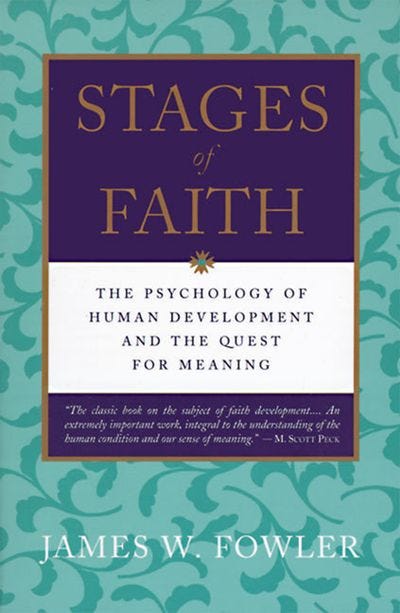
Rather than debating conflicting truth claims that confound our efforts to learn how individuals “grow” their faith, Fowler aligns religious faith development with known and plausible theories of how people develop cognitively and emotionally.
This book gave me two great gifts: first, a kinder and more useful lens with which to view others and their spiritual development; and second, a non-sectarian vision of the stage of faith that I myself aspire to attain. (Spoiler: it’s Stage 6. Further spoiler: only a few have reached Stage 6. Probably not us, yet.) This is the book I beg seekers to read; this is the book that anchors my hope for new tolerance and compassion for the uphill walk of faith we all must tread.
9 Guns Germs and Steel, by Jared Diamond
Or, Winners and Losers Really Are Chosen at Random
When I picked up this book a few years ago, I was impressed with its thorough, tenacious root cause analysis of why some populations thrive and some don’t. I have no expertise to assess Diamond’s conclusions, and cannot argue them. However, along the way, he skillfully and completely debunks the malignant assumption that some peoples fail because they are somehow inferior. I galloped through the book, muttering, “Yes!”at intervals, under my breath.
Diamond’s broad research and accessible arguments make it clear that the success of a population or culture depends primarily, and inescapably, on the natural conditions in which they are born and must develop. The chance distribution of humanity over the wide variety of possible environments has expertly stacked the deck against some folk and in favor of others. Perhaps it is cold comfort, but Billie Holiday was right:
“Them that’s got shall get; them that’s not shall lose:
So the Bible says, and it still is news.”
Doesn’t mean we have to accept the situation and give up. Just means we might have a better chance at improving the lives of the “have-nots” if we weren’t also busy blaming them for not- having.
10 Paradise Lost; Paradise Regained, John Milton
Or, The Light That Makes Miracles
It was only recently that I ventured to read these epic poems of John Milton. I had no idea what to expect from these classics — were they to be exhortations to piety, like The Pilgrim’s Progress? Cautionary tales, like Dante’s Inferno and Purgatorio? Or… what?
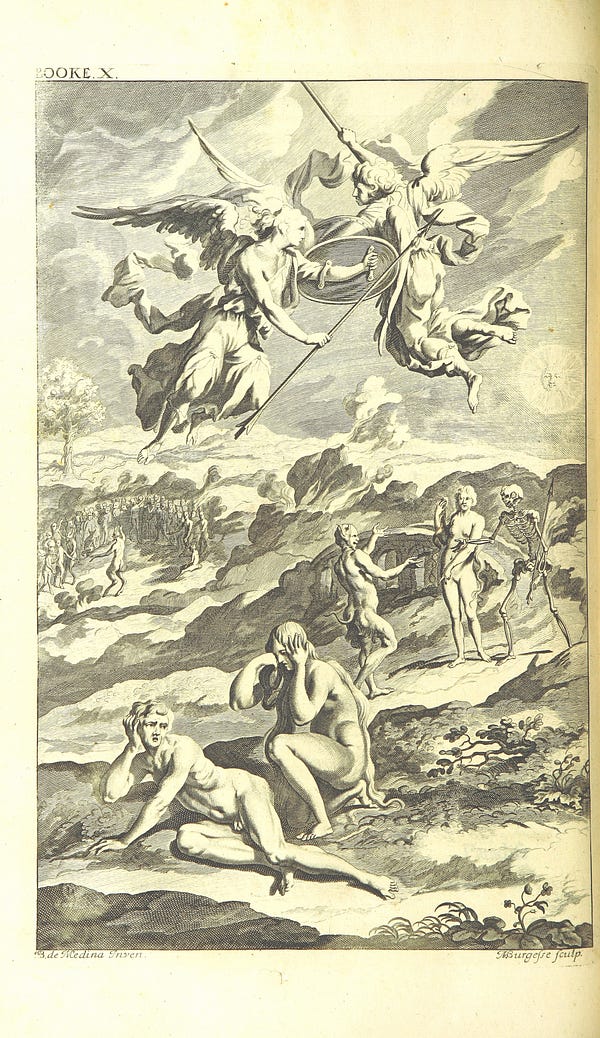
None of the above. Instead, I found thunder and lightning, pitched battles, warrior angels,and smooth-talking demons! There was love — loss — pathos! And, incredibly, there was suspense, even though I knew how these stories end. Once I adjusted to the language, I was immersed in a vivid, cinematic, powerful retelling of these Judeo-Christian sagas. I was stunned that I would find this drama so influential, at this late and cynical stage of my life.
To be clear: reading Milton’s epics did not inspire a conversion event or convince me of any specific miraculous Christian truth claims. But what I did find truly miraculous was the way that these sublime, powerful images could be transmitted so vividly and authentically by a man who had lost his sight. I believe the gift of creative inspiration has something of the divine in it, and thus can transcend human limitations, as it did for the poet. Milton’s eccentric, independent faith did not conform to the expectations of the time, and yet it was bright enough to illuminate his vision of the Divine Drama from within.
And then, hesitantly, comes the thought: what if even my eccentric, struggling, ebbing-and-flowing faith could illuminate new worlds for me — if I could only learn to have faith in my faith? And what if it could do that for you, as well?
 Rev Dr Sparky on Real/igion
Leave a comment