A 7-step program for recovering word junkies
Writers are almost always devoted readers, and we know that exposure to good writing will help us in our own work. I firmly believe that reading widely and wisely is essential to being a good writer, despite everything else I’m about today. Reading is a good thing; it teaches us and befriends us and invites us into other worlds.
Reading is powerful medicine for our souls.
But: I may have overdosed.

Like you, probably, I’ve been a reader most of my life (choose your adjective: “avid”; “voracious”; “constant”; proud”). But now I’m wondering whether I may also be an addicted reader — a word junkie, to put it bluntly. To test my theory, I went to several addiction websites and looked at some checklists. It was disturbing.
You might be a word junkie if…
Here’s how a typical addiction checklist looks, with “reading” named as the problem substance:
- I often read alone and in secrecy.
- I have been losing interest in other activities that were once enjoyable.
- I frequently have reading cravings.
- When I don’t read, I have withdrawal symptoms (anxiety, irritability, etc.).
- I feel guilty for spending so much time reading.
- I find myself reading first thing in the morning.
- Even though I need to pay attention to my health, my finances, and my family problems, I continue to read.
- I feel as if I am unable to stop or control the amount of reading that’s consumed.
- I sometimes drive while under the influence of reading. (No? What about texts and notifications, then?)
- I often make reading a priority over responsibilities, such as family and employment. Or writing.
I got a perfect score of 10 on this list, so I know I’m on to something.
And in case it sounds as if I am making light of addiction, rest assured I know from experience that some addictions are far more dangerous than the urge to buy a book or follow a blog. But any habit or addiction that diminishes our serenity, or disrupts our purpose, can be taken seriously, even if it is not immediately life-threatening. So I’ve taken the first step:
I admitted I was powerless over reading, and that my life had become unmanageable.

I am wasted with words.
A lifetime of reading abuse has created a riot of language in my mind. The words are like millions of socks, just tumbled into a drawer, unmatched and unfolded. It’s no wonder it’s so hard to find the ones I want any more.
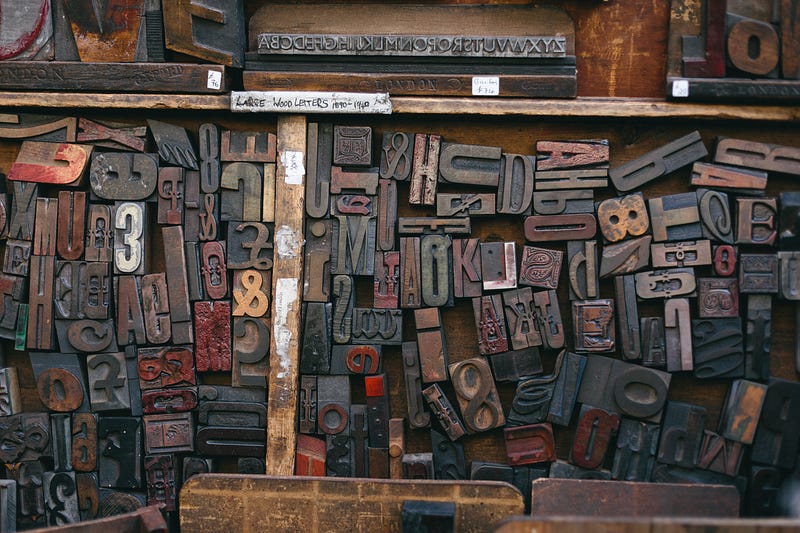
Moreover, the words are constantly darting about in there, with a kind of Brownian motion impossible to track. The verbal chaos is so distracting that lately I am missing appointments, driving really badly (like those other drivers), and finding it difficult to focus.
Now, I am trying to get rid of those words by writing as fast as I can, but my output can’t keep up with the input. For one thing, each time I write something, I do more reading to support it, so it’s always a net increase. Moreover, writing means selecting only the right words to use, so that means a lot of rejected words are just loitering around, causing trouble. You see the problem.
One word is too many; all the words are not enough.
As I face this situation frankly for the first time, I must ask what reading really means to me.
- What itch does reading seem to scratch?
- What are my expectations? Even if I could read 24 hours a day, would I ever make a dent in the wealth of good things to read? Hardly.
- What are my real expectations? Am I looking for enlightenment, somewhere in a book? While research suggests that reading improves concentration, memory, and self-esteem, I doubt that we can read our way to spiritual and moral perfection. Years ago, as a research fellow studying religion and intellectual life, I attended a seminar on meditative practices. The presenter shocked us all when he said bluntly said, right up front, “Don’t buy a book on meditation. Find a teacher.”
The Bible is the bestselling book of all time, and the Qu’ran is right on up there. But no one can prove that reading those books has made people any better. And even though “self-help” books remain the world’s bestselling genre, there are still plenty of helpless people around, and I’m probably one of them.
What if I just… stopped?
For the first time in my life, I am wondering what would happen to me if I just stopped reading for a while. Just… didn’t read. No new books; no Medium articles; no scholarly articles downloaded from my JSTOR account. Have you ever considered doing that? Well, you can — you can choose to stop reading, too. But after you finish this page.

Would I go through withdrawal, in the absence of my drug of choice? Would I just become an illiterate, apathetic couch yam, wasting my life watching television and playing Angry Candy, or Crushed Birds, or whatever? I don’t think I’d devolve that way, but even if I did, there are 7 billion people on the planet whose lives would go on just fine, anyway.
Time for a recovery program
So now that I know I am a word junkie, I’m developing a program of recovery, to reclaim my thoughts and my time. Let me share some steps I think will work:
- Start small and ease into it. Those piles of unread books lying around your place, guilting you every day? Put them on the shelf, where they belong. They will stay there. Those great articles and essays you come across? Bookmark them for later. When someone mentions yet another book you “simply have to” read, just say no. (Watch their face when you say, “I’m not reading right now.” It will be fun.)
- Trust that you have enough words already. Befriend and meditate upon the words you already know, as they float through your mind and heart. And if some of them float away, don’t worry. You can find them later. You never needed the fancy ones, anyway.
- Take it a day at a time. Try scheduling a day where you spend time in the real world, instead of compulsively picking up a book or clicking a link.

- Replace behaviors. I’m spending more time with music — listening, singing, dancing. I have always had to read in silence, because music engages me so fully. Trading some of that silent time for music time feels like a gift to myself; I recommend it.
- Redirect energies. I’ve replaced my bedtime reading with bedtime meditation, which is perfect, because meditation always puts me to sleep anyhow.
- Explore other skills and interests. When I get restless and need a reading fix, I try something different. I might make something, or mend an old book, or dig in the dirt and plant some herbs or flowers. Also, my house is much cleaner than usual.
- Check in with your people. Even as an introvert, I am finding it rewarding to step out for a lunch or a chat. I’m trying to give my real-life friends at least as much affection as I give my fictional friends. After all, Jane Eyre and Jack Reacher, wonderful as they are, cannot love me back.
From “Read/Write” to “Write/Read”
Getting out of my head and into some real life has paradoxically enabled me to write more than ever. Since I became a recovering reader, I begin each day writing, just as I used to do, just as so many accomplished writers recommend. No, I haven’t run out of words yet, but the pressure has eased.
It would be a bonus if these new practices and priorities resulted in my finding life-changing success as a writer. But that’s not important. What’s important is that I am now deliberately doing the one thing I have always wanted to do: to write things that other readers may want to read.

I expect I’ll resume serious reading after a time. I’ll always be a reader, because reading miraculously invites me to enter other lives, other ideas, other worlds.
But to be a writer, I need to live my own life, find my own ideas, and understand my own world, so that I can capture it in words.

 Rev Dr Sparky on Real/igion
Leave a comment