Time to tidy the world
It always makes me glad to find a really good thrift store. For me, thrift shopping is a treasure hunt, a therapy session, a trivial defiance of consumerism and materialism, and a way to live beyond my actual means. I felt thoroughly vindicated when Macklemore’s song hit and made thrift shopping cool. Some of us have always known it was cool.
Why? Because it’s a sound alternative to mall shopping — or even online shopping. Mall shopping gives the illusion of choice, but it actually guarantees that you will come away with only those items the Great God Mammon has blessed. Try as you might, you will eventually knuckle under to the prevailing tastes.
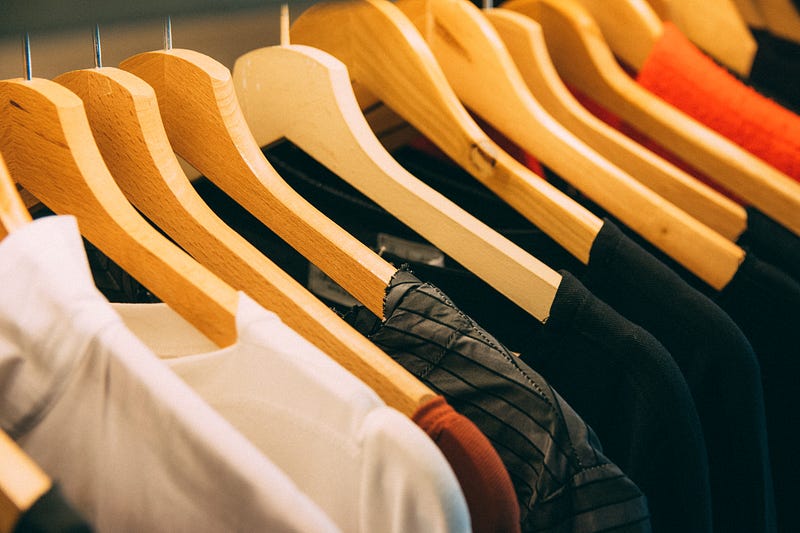
Your sleeves will be three-quarter length, and your trousers will be short and skinny, as they have been for years, because they take less fabric to manufacture at scale. The colors you buy will be that season’s colors. Even online shopping, which seems to provide endless choices, has similar limits. The shapes and cuts and fabrics will vary only within a range deemed acceptable for mass consumption. If you want anything different, or timeless, or suitable to your own particular taste, you must either hire a tailor — or go to the thrift shop.
For years, I have bought most of my clothing second hand, especially the business apparel I needed when I worked a straight job in a buttoned-down environment. I take perverse pride in my skill as a shopper. If I buy a Liz Claiborne blazer on sale, I’m a smart consumer. But if I can get one with the tags still on for $9.99, I am a stone genius. I paid the same for a Coach bag as I would spend for a plastic tote at a big box store. About the only things I don’t buy at secondhand are underwear and shoes. Because that’s gross.
So I’ve always felt my hobby was actually a virtue, without really articulating why. But I can find a philosophical or spiritual dimension to just about anything, so I was interested in articles like this one:
https://thecommonlife.org/2017/06/24/thrift-shop-theology-seven-reasons-macklemore-was-right/
This article affirms the moral goods that second-hand shopping represents: it supports local commerce, promotes wise use of money, and encourages creativity and out-of-the box thinking. Though the author takes a Christian perspective, most other faiths and philosophies will agree that consumerism can be a hindrance to our peace of mind.
But “consumerism” is actually a euphemism, I believe, for the fact that we are filling our world with trash. And that’s the crisis that the lowly thrift store shines a light upon.
The earth’s epidermis
Many people like to think of the earth as a living entity, personified as Gaia. Over millions of years, the earth grew a thin skin of increasingly complex biological material: the biosphere of plants and animals and people.

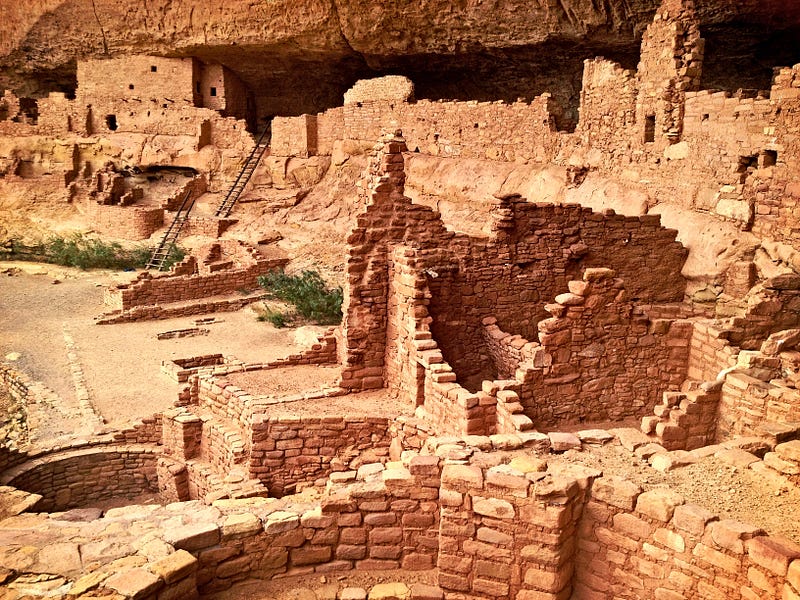
As humans evolved, we added to this biological layer a created layer — our buildings, bones, arts, and artifacts. Cities would rise and fall, often built again on the middens of the previous town, so that something remains of humanities endeavors. I’ll call this the Indianosphere, after Indiana Jones, the only archaeologist most of us know.
However — and I know I overly simplify this evolution — when humans began to extract the ancient fossil material that had been safely stored in the earth, we created yet another layer that littered the land and poisoned the air, in the blink of an eye. This layer comprises what I call the craposhere, because that’s all it is — millions of tons of miscellaneous crap. I hope the term catches on.
Introducing the craposphere
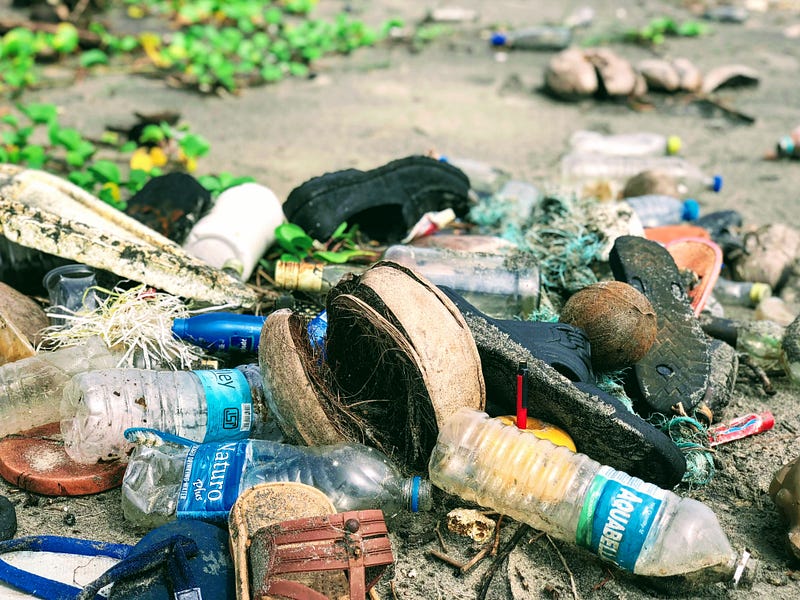
The craposphere layer is like the unsightly top layer of skin, the dead cells we are so careful to exfoliate (to retain our youthful glow). Unlike the skin you scrub off your elbows, the craposphere is not easily biodegradable. So even if there were a loofah big enough to do the job, all we can do right now is move the debris around.
We’ve filled up the “away”
The craposphere is is a thick mix of single-use plastics and general garbage. The amount of trash humans generate has already reached crisis proportions in the United States and around the world. One average American generates about 4.4 pounds of trash per day, which we have been accustomed to just throwing away.
But we’ve nearly filled up the away, and we are terribly, terribly slow to change that habit. Sure, we happily, virtuously recycle our plastics and paper. But how many of us bought plastic containers in which to collect those recyclables? I rest my case. We’re slow.
And we still keep stripping resources from the earth itself and turning them into cheap, throwaway crap.
All right, this piece is getting depressing, when we started out so gaily talking about buying designer clothes for cheap. Sorry (I’m not sorry), but the crap crisis is an ecological crisis, as dangerous as the climate crisis. We will have to deal with it to survive. But bear with me, because there is hope.
The next evolution
The root of the trash problem, I think, is the primal human urge to grow and multiply ourselves without restraint. While I appreciate that “life wants to live,” it appears that it wants to live surrounded by more and more things. The one who dies with the most toys wins, and all that. But we still have to be reminded, as Steven Wright brilliantly did:
“You can’t have everything. Where would you put it?”
We aren’t yet able to look at the world and say, “It’s enough — let’s find a different model for relating to the physical the world.”
Some will say that anything not growing is dying, and they believe that achieving a state of balance will doom humanity to extinction. Maybe so, but I there are many more instances where populations collapsed because their environment could no longer sustain them. Jared Diamond is just one voice sounding this alarm; there are many more we are choosing to ignore.
The answer is in the noosphere
But doomsayers are ignoring what may be the next hope of the species. Thinkers like Pierre Teilhard de Chardin envisioned, in addition to the biosphere and the Indianosphere, the noosphere — a spiritual layer. Teilhard suggested that humanity’s collected consciousness is ever-evolving, headed toward a profoundly spiritual universal enlightenment. While I don’t pretend to fully understand Teilhard yet, I believe his theory is promising. Perhaps we are not destined to stay as obtuse and self-defeating as we seem to be.
If a general spiritual evolution sounds impossible, or just too goofy, think again. There are precedents throughout our history. To get where we are today, humanity had to undergo transformations of similar magnitude before — and each time, we probably could not even imagine the next advancement.
For example, what was it like for early humans as they transitioned to consciousness of selfhood? Were there transitional generations who suffered some kind of mental tinnitus — noise or images that only later resolved into some sense of identity?
And what about the transition to language? The development of language could have been a complete surprise, confusing individuals and frustrating couples, just like now. Were individuals mystified, as words developed? (“Damn this voice in my head… I don’t get all these “words” and all. Wait, did I just make up a “word”? Ah, for crying out loud — I’m trying to hunt!”)
And we are still processing the species-wide development of religious awareness that remains poorly understood, or perhaps simply remains at the storybook phase. Many visionaries look beyond our primitive expressions toward James Fowler’s sixth stage of faith, which may perhaps be the necessary next step.
Is it so farfetched to believe that our minds and souls can be further improved? I just think it’s arrogant and small-minded to think we’ve already peaked.

The optimist believes this is the best of all possible worlds.
The pessimist is afraid it is.
Evolve to survive; survive to evolve
I’d hate to think that we were just about to move up to the next level, but we drowned in our own garbage instead. So, against a lifetime of being programmed to acquire and consume and then discard more and more things, some of us are starting to look again at the things already in the world.
So that leads me back to thrift shopping.
Thrift shops exist because we know, deep down, that we have discarded, along with useless trash, many things that are still useful and even beautiful. By shopping resale, we support a shift in our economy away from ever-increasing production and toward improving distribution, manufacturing for quality not quantity, planning for multiple uses, and rethinking what prosperity really means.
King of the (trash) mountain
There are whole families who make a living sorting garbage by hand and reselling what they glean. In the event of some kind of widespread collapse, we may all need to scavenge to survive. I feel my thrift shopping has taught me worthwhile job skills for the coming garbage apocalypse.
Despite myself, I still buy more things than I need. But then I can donate them, which is not throwing them away . It’s putting them back in the stream. I just have to remember to donate at a different place than where I shop.
Giving away what I don’t need reminds me that ultimately we don’t really “own” anything. We have temporary custody of these things, this earth, those children,these bodies. Ultimately, though, we will relinquish them all.

Thrift store of the cosmos
They say matter cannot be destroyed. Trace the journeys of a single plastic bag and you’ll see how true that is. So perhaps our evolving consciousness will begin to recognize that every thing has value, each according to its purpose, even things that are discarded or broken or worn out.
And then perhaps we will learn that every person has value, even though they, too, may be discarded and broken and worn out. Or lost. As one such discarded, broken, and worn out soul once wisely said, “I know I’m worth something, because God don’t make junk.”
Perhaps this thought experiment has inspired you to be part of the evolution of the mind and hearts of the species. Perhaps it will prompt you to seek for things of beauty in unexpected places. Perhaps it will remind you to rinse the damned plastics before you recycle them.
And perhaps you will be reassured that most of the things you will ever need — complete with patina of age and provenance — already exist in the world.
Ready to be found.
 Rev Dr Sparky on Real/igion
Leave a comment