Nine of them. And you can, too.

People often like to say they hate rules: they believe rules are made to be broken; rules are for fools and sheeple and chumps. At their best, those rule-breakers are wildly creative and productive, bringing fresh thinking to the world. At their worst, they are taking up two parking spaces, shoving in front of you without saying “Excuse me,” standing you up for a lunch date, bilking people out of millions of dollars, or committing serial murders. Which is probably why they stood you up for lunch.
Most of us fall somewhere in the middle. We chafe under trivial, irrational restrictions. Why can’t I set off fireworks in my backyard? Who says how loud I can play my music? Why can’t I go 90 miles an hour if the highway is clear and I want to? (I know the answer to that one: because eventually, you’ll get a ticket. Trust me on that.)
And yet, most of us willingly accept rules in other contexts — games, for instance. Rules define a game. When you hit a baseball, the regulation chalk lines determine whether it is fair or foul. When you Go To Jail, you Do Not Pass Go or Collect $200. Those are the rules, Jack.
Furthermore, most of us admit that rules are necessary in public spaces, if only to keep the other clowns in line. (I can change lanes without signaling, but you’d better by God not try it.) So even though we rebel against too many rules, or the wrong rules, there are some rules we believe in. Some rules make our games more exciting and our lives more peaceful.
Religious and spiritual traditions depend upon rules to establish their identities, and whether we agree with those rules helps us decide if that’s the path for us. But an even more advanced spirituality requires more advanced rules, such as those that guide monastic orders like the Benedictines or the Trappists. Even communities of laypersons, or “third orders,” offer comprehensive sets of rules for guidance.
So I’ve decided to make my own rules for living, so that I can become a most excellent spiritual person. It looks like just another list, but it’s not. Making your own spiritual rules means you think hard about your values, your aspirations, and the actions you are willing to take daily to live out those values. I think you’ll find it’s tricky but satisfying.

What are the rules of this road?
My life has undergone some wonderful and frightening transformations lately, and I have found myself stumbling a little as I tried to find my new path. (I’m also not even sure it’s a “path.” Could be just a back alley, or a field of poppies.) When I trip (metaphorically speaking), I do that thing where you look back at an imaginary banana peel and frown (again, metaphorically). I don’t mind looking foolish, but I think I could help myself if I structure my spiritual inquiries a little better.
Not these rules
But I did not want a list of “Thou shalt nots” — we already have plenty of those — but a list of “Thou shalls…” And I didn’t want to write down lofty, vague spiritual notions; I wanted specifics. Deliverables, if you will. As a child, when my Christian friends would earnestly tell me that all I had to do was “believe on” Jesus, I would irritably ask, “But what am I supposed to DO?” No one knew; they just… believed, I suppose. That wasn’t good enough for me then and it’s not good enough now.
As I started working, I unearthed some antiquated “rules” I had been imposing on myself, usually with a “should” attached to them. You may have some of these, too:
- “You really should meditate more/go to church more/do yoga more.”
- “You should stop being so anxious/angry/bitchy.”
- “You should be nicer; be more forgiving of others.”
First — are they the right rules? Or are they imaginary? They sound suspiciously like guilt-trips and old scripts absorbed during early childhood and retained into adulthood. I wanted to replace those negative rules with constructive ones.
My soul, my rules.
So here are Rev Dr Sparky’s rules, with a behind-the-scenes look at the aspirations and inspirations that birthed them.

Rule 1: Love life and keep breathing.
The first thing I needed was a reason to get up in the morning. Sounds brutal, but it’s true. I often awoke with what Walker Percy called “morning terror,” which I identified as a glitch in the morning reboot of my consciousness. But a few deep cleansing breaths always helped, so I needed a simple rule to remind me. My first rules affirms that life is good, and that if I am still breathing, I am already ahead of the game.
Rule 2: Remember I already belong to the universe.
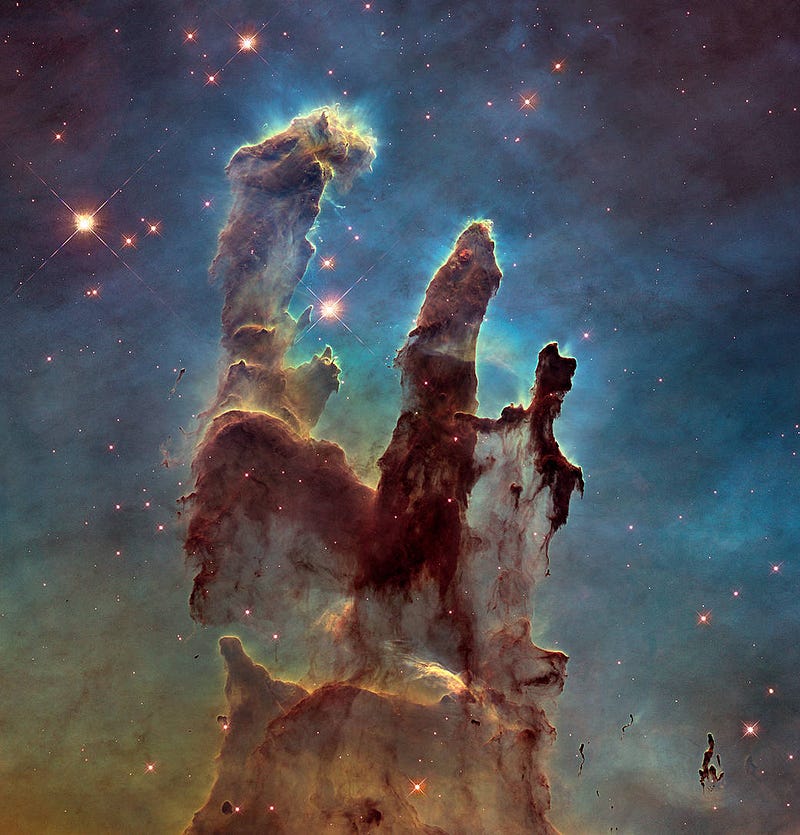
My meditative practice is simple. When the world seems too much, I breathe deeply (required) and imagine myself as a particle in infinite space, minuscule but connected with everything (optional). I remind myself that we are stardust, made of particles that were present at the creation. This Hubble image is my doorway to this reality, and this rule reminds me to go there.
Rule 3: Repent for being a selfish brat.
Spiritual work is not all rainbows and angels helping us find parking spaces. We each have our own pasts, our failures, our signature moves that always seem to muck things up. “Repentance” for me means a feeling of deep regret, not self-hate or self-shame. And then it means we say, “I won’t do that again.” It means we turn away from the dark. It’s like when you yell to the doomed heroine in a scary movie, “DON’T go in there again! What’s the matter with you?”
I do my worst when I succumb to the wild moodswings I live with. To be clear: I am not repenting my own emotional makeup. I didn’t choose my neurochemistry, and it is also the source of much good. But I do regret the times when I deliberately shut out the voices of reason or restraint and let myself wallow in resentment and shame, or careened into irrational ambition and costly, mad pursuits. So I repent, turning away in hopes that I will wise up and quit harshing my own mellow.

Rule 4: Get wise and get real.
I wrestled with my first three ground rules for quite a while. After that, the rules got a little easier to write. I realize, of course, that if we are making our own rules, we’re actually just telling ourselves to do what we want to do anyway. I wanted a rule to tell me to seek wisdom, which I like, but I knew I had to require myself to face truth, which I sometimes don’t like. Much of our “wisdom” is a merely a pleasant collection of aphorisms and observations, to be dusted off whenever we need comfort or perspective. But truth in the real world demands that I really confront it and live with it. I hope I will be brave enough to do that.

Rule 5: Treat my body kindly but firmly, so it doesn’t misbehave.
Religious rules often have strict instructions on how to deal with these bodies of ours. Some spiritual folks prescribe a life of asceticism, suggesting that self-punishment is the way to holiness. Nuts to that; it’s not for me. I don’t believe self-induced suffering is necessarily useful, unless you’re Gandhi and you’re fasting to end British rule. I’m not Gandhi, I’m pretty sure, so my rule is simply to do my best with the body I was issued. That way, it might actually be good for something.
Rule 6: Leave the world a little better than I found it.
From childhood, I was taught — indoctrinated, really — to leave a campsite cleaner than you found it. That early learning is the basis for my efforts to do some good in the world, once in a while. And I know all the sophisticated arguments against the straw man of the “do-gooder”: we don’t always know the right thing to do; sometimes we just make things worse; helping others is really egotism; blah blah blah. All true statements, perhaps, but usually just excuses for doing nothing. So I kept this rule simple, though it contains vast requirements to act with lovingkindness and justice every day.
Rule 7: Accept my limits. Oh, and yours, too.
I am not a patient person by nature. I often strain at the limits of time; try to see into the future; hurry through projects so I can get on to the next one; criticize myself when I can’t do things I think I should be able to do. I’m not afraid of dying, I’m just annoyed that I’ll probably die before I have finished my To Do list. So I need a rule to remind me that time and death and our natural limits are not ours to control. I am trying each day to be mindful of and patient with the limits of my life and the limits of others.
Rule 8: Go out and make some joy.
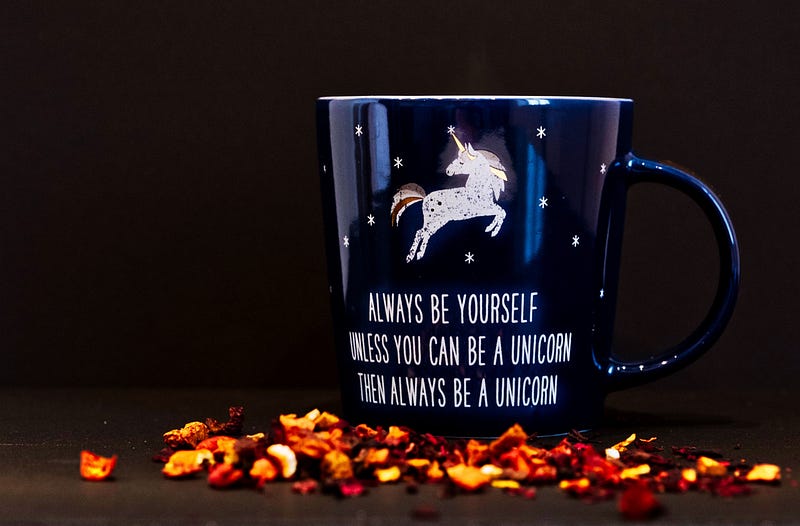
It’s one thing to seek enlightenment. It’s another thing to be so “enlightened” that we dourly forget the value of celebrating love and laughter; creating beauty and song; curating the time we give to work, rest, and play. Old-time church folk will call it, “Being so heavenly-minded that we are no earthly good.” This rule tells me to get out of my own head and be in the world sometimes. My rule reminds me that I can either shut off joy, the way I turn off notifications, or I can invite it in.

Rule 9: Be ready to let go of all that, in the wink of an eye.
I imagine my rules as a loose progression I can follow through a day in my life. That way, as I compose myself for sleep, I can reflect — did I learn something new that day? Did I do an act of lovingkindness? Did I sing or laugh or play?
If the day goes well, I’ll be satisfied to relinquish it; I’ll be glad to slip into sleep and be ready for the next one. And then I imagine my whole life as one long day. If I honor these rules, will I find, at the end of that day, that I have fulfilled my tasks, cherished each breath, and left the world a little nicer than I found it? It seems the best aspiration of all — to live this life so fully and well that we could leave it without regret.
But not today.
Today I’m only at Rule 8. I may stay there for a while.
 Rev Dr Sparky on Real/igion
Leave a comment