Future conditional.
Words are a miracle that we too often take for granted. We toss them around like Nerf balls, forgetting how essential they are for connecting us with the reality of people and things. And language — the way we weave those words together — reflects how we move through time. Language itself is a miracle, permeating our consciousnesses and illuminating our souls.
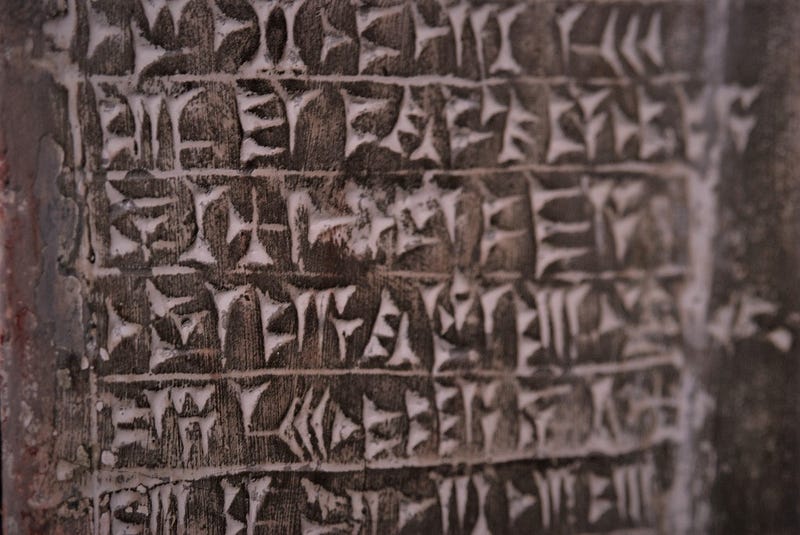
Because language is so important, I try not to take it seriously. I play with language all the time, finding examples of ambiguity, paradoxes, and oddities. I do a little light deconstruction, looking for new perspectives on old problems. My puns are always intended. For example:
Did you know that baseball is in the Bible?
It really is.
Genesis 1:1 starts right off: “In the Big Inning…”
I don’t apologize; I love that stuff. Furthermore, it’s not trivial. When we play with words we are playing with consciousness, mystery, and eternity.
Time and the Word
Texts acknowledged as sacred by some may resonate with others as well. Thanks to rock and roll, even the non-religious will be familiar with Ecclesiastes’ classic Biblical riff on time:
For everything there is a season,
and a time for every matter under heaven:
a time to be born, and a time to die;
These words of ancient wisdom teach us how to tame time and live with change. (Disappointingly, “turn, turn, turn” isn’t actually in the passage. And I apologize if it’s stuck in your head now.)
But time lives in the very structure of our language, in the way we name its parts. Let’s deconstruct some more.
“Past Perfect?” We like to think so.
The actual past somehow melts in our memory, becomes conflated with our youth and hope and potential, and thus becomes the perfect past.

Past perfect verbs describe actions that have been completed, in that perfect past. But mostly that completion is an illusion, for change is ongoing and time never stops. William Faulkner famously said,
“The past is never dead. It’s not even past.”
That perfect past we long for is still revealing itself, as our understanding grows and unintended consequences emerge. For example, I thought I had completed my career (past perfect), and now I could be at ease. And then I realized I was not done; I had more work to do, my real work. And, in the economy of the soul, I was always already going to do that work. I don’t know how the hell to parse that sentence, but it’s not past perfect.
“Present tense?” Yes. Yes it is.
We are fearful and jittery in the present, where we have news 24/7; crises and cliffhangers every minute of every day; rampant FOMO; and the vague sense that somehow we are chronically behind. I know this to be true by the number of lists we make.
To compensate, we keep chasing some experience of the “now” that exists apart from all those worries and distractions. Meditative practices seem to aim at a sort of a “zero inbox” goal for the mind: accept each thought and then let it float away. That’s fine, if it helps people cope. I personally find it impossible to unsubscribe from all the cosmic mailing lists I seem to be on.
But what if this tension in the present is actually fear for the future? We may feel that the future is rushing toward us, and there’s nothing we can do to hold it back. It’s as if we are standing in a tunnel, not knowing if the light ahead is really an oncoming train. Hard to relax in that scenario. At least we’re not tied to the tracks. (Or are we? Just putting that out there.)

The future? Uncertain. Contingent. Conditional.
For decades, even centuries, we in the West have sensed that the rate of technological and material change is increasing, and will continue to increase, until the world spins out of our control forever. To be sure, the gadgetry alone is enough to take up all my available mental energy.
It helps our perspective if we keep our eyes on the game-changers we really need: sustainable food production methods, non-polluting energy sources, accessible medical care, and civic institutions to ensure justice and the common good. We know that if we allow our present time to be sucked up by a new gadget every week, we won’t be able to work for the future we hope to see.
The future remains conditional. Whatever is happening now, it could get worse. That’s true. But it doesn’t have to, if we just use our timey-wimey thinking-words to reflect on the past so we can do better in the present.
Words can either destroy truth or protect it.
I believe thinking people today are genuinely afraid that the internet, our latest and greatest medium for information and expression, has broken truth. Hand in hand with commercial media, the internet has quickly become known as a cesspool of lies, hate, and hucksterism.
Everything we ever learned is wrong.
Including that.
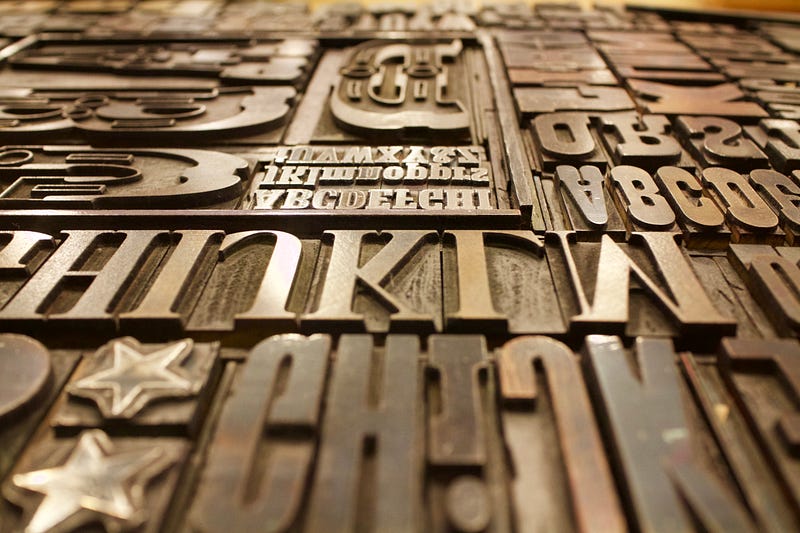
We forget that movable type, another disruptive technology, did the same thing 500 years ago in the West, and nearly as fast. Suddenly, the public sphere became flooded with pages and pages of fiction, fantasy, and fact — but also lies, political screeds, and the worst superstitions and bigotry. And the power to broadcast lies was up for sale — anyone with a little money could buy a printing press, subscribe to a book, or purchase an advertisement.
But after the initial heady, outlaw days of publishing, societies began to develop standards for accuracy in reporting and truth in advertising. The line between fiction and non-fiction became more sharply drawn, and the responsibilities of authorship more direct. Inscribing those standards took time, conscience, public support, and cooperation among business, government, and academia. When people realized that lies damage lives, they worked to improve the way knowledge is collected and protected.
We could do the same today, if we put our minds to it. I don’t know about information, but truth wants to be free — not pimped out by advertisers motivated only by their own profit.
It’s the same with our souls.
Just as we use words to travel the world of ideas, we use them to explore our sense of ourselves through time and into eternity. While there are surely other deep ways of knowing — kinesthetic, visual, musical, psychedelic — words seem to be the most common to the most people. (People are hilarious. We even have a word to describe things that are indescribable — “ineffable “— and we say it with a straight face.)
In my cosmology, those millions of human words are like cells, or bits, or bytes, comprising the great Word: the Logos, the Source of Ultimate Meaning. Language allows us to point to the Great I Am that cannot be named, but names Itself with a simple present verb. A simple Presence.
Ecclesiastes continues:
That which is, already has been;
that which is to be, already is;
and God seeks again that which has passed away.
To best nurture our souls, we are required to seek the wonderful wordless experiences of love, creativity, dance, or work.
But we are also required to give words to our soul’s truth, because our souls have already always wanted to speak that truth.
 Rev Dr Sparky on Real/igion
Leave a comment