With apologies to John Keats (and Elizabeth Gilbert)
It appears that writers cannot help thinking about writing. I suppose it’s analogous to sculptors thinking about carving marble, or musicians thinking about making melodies. But with writers, it’s amusing because we are thinking about words with, of course, words. It reminds me of television commercials advertising televisions — they show you the great picture their television produces, but you’re seeing it on whatever crappy screen you happen to have.
Or when you sit so long thinking that you turn to stone somewhere.
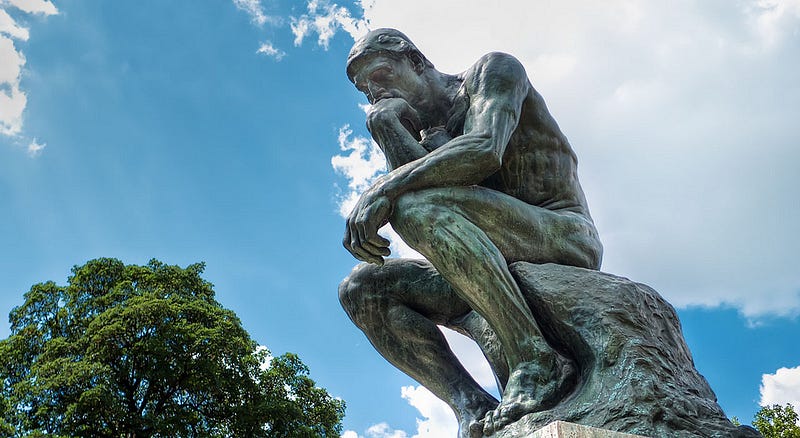
We seem driven to explore exactly why the act of writing compels us, inspires us, or feeds us with love. For fun, search the phrases “poems about poetry” or “essays about essays.” Or just read the wonderful musings of fellow writers on this or other publication platforms. It’s as if we have updated Socrates’ dictum about the “unexamined life” to say, “The unwritten life is not worth living.”
But we are not the first writers to write about writing. In fact, as often happens, I find that an old poem best expresses the immediacy I feel today about this process of documenting my inner thoughts and experiences. I invite you to reflect with me upon John Keats’s 1818 sonnet:
When I have fears that I may cease to be
Before my pen has gleaned my teeming brain,
Before high-pilèd books, in charactery,
hold like rich garners the full ripened grain;
I recall that the first time I read those opening lines, my heart raced a little in recognition. Yes, I thought: yes. He’s reading my mail. Despite my occasional bravado, I am chronically afraid that I might “cease to be” before I have said what I came here to say. My brain “teems” with words, as a pond teems with fish, or a ripe field teems with barley, or a Petri dish teems with germs.
So I learned to glean those words with my pen, writing almost compulsively, trying to thin out the crowd and reduce the pressure on their habitat. But writers are usually also readers, and the reading I did over the years just added more words. The words built up inside my head till it was often as noisy as a bowling alley in there.
Words, food, fears
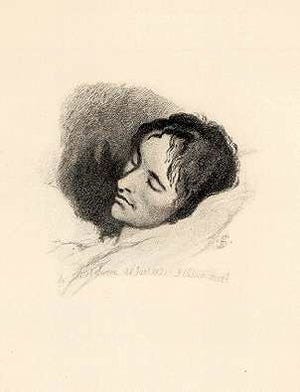
John Keats doesn’t complain about being full of words. Words grow and nourish us — but he can’t harvest them fast enough to get them to the granaries. And he’s writing all those words in longhand, in “charactery,” so there’s that, too. He’s afraid he’ll simply die (probably with writer’s cramp) before he has filled the pile of books he knows he could fill.
And he was right. Keats died of tuberculosis at the age of 25.
But not before he had written and published literally thousands of lines of verse. He poured out poetry in the brief period lasting from 1814 till the summer of 1820. He published Endymion — 4000 lines of rhyming couplets in iambic pentameter — in 1818, when he was 23 years old, to mostly poor reviews.
Kind of puts to shame the seven-minute reads, which don’t even rhyme, that I’ve been proudly generating every so often. (Endymion would be, what — a seven-day read? A seven-week marathon?) I could attribute the contrast in contributions to the times — his more short-lived generation did their adulting earlier than we do now. But that’s nonsense. There’s talent, and there’s genius, and I know which each of us probably has. Me and John Keats.
Lessons from the poet who never lived up to his potential
I honor John Keats’s voice, when it speaks of the urgency to write before its lungs give out and its breath ceases to be. Despite my years of furious smoking, I never got tuberculosis or any other dread disease (so far). But I still always thought I’d die young, so I was always in a hurry for everything. I am finally too old to die young (awkward), and now the pressure has only increased.
One reason to write is to keep death away, or at least, to unfriend it, because death is a universal bitch to everyone. Perhaps that was what Keats wanted to do. On the other hand, in “Ode to a Nightingale,” he writes, as he hears the bird sing in the night, “Darkling I listen; and, for many a time/I have been half in love with easeful Death…”
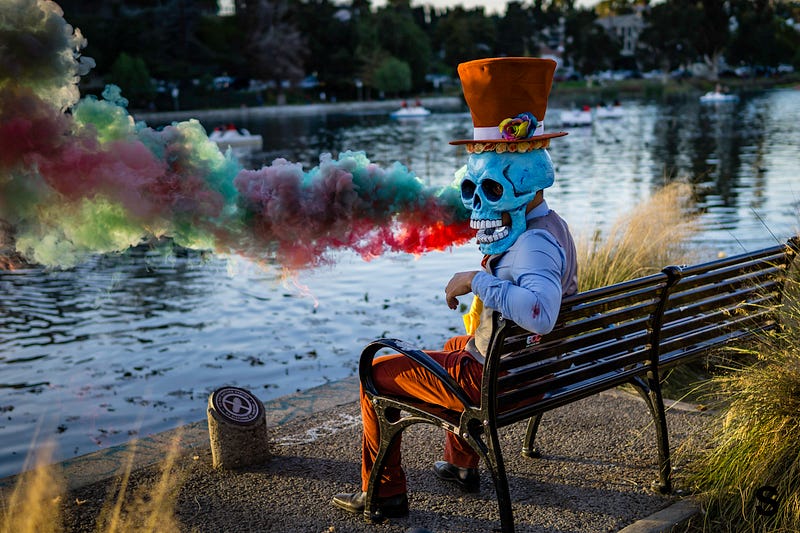
I believe that when Keats wrote this sonnet, he knew what was coming. And indeed, he suffered mightily in the last few months of his life, finally begging for opium to end it all. No one would give it to him.
Stars, shadows, magic
But now Keats’s poem ups the ante. It’s not just the writing he fears he’ll miss out on. He’s going to miss all the mysteries, too:
When I behold, upon the night’s starred face,
Huge cloudy symbols of a high romance,
And think that I may never live to trace
Their shadows with the magic hand of chance;
He yearns for time to know the “symbols of a high romance” that live in the “night’s starred face.” He knows that no one is guaranteed a glimpse of the mysteries; it’s up to “the magic hand of chance.” But still — he wants that chance, because the shadows of the stars are where he wants to roam.
Now John Keats is really twisting the knife. When I first read these lines, I thought, “That’s right: we could come this close to understanding everything, and then — a dirt nap, and we’re not even tired.” I know now that this twisted fate is the central human comedy, the cosmic pie-in-the-face, and hence the central human tragedy. That’s why I laugh and make light of it all: to offset the dark. Obviously.

So: poetry and mystical understanding are on the line. It’s almost disappointing to me that Keats goes on to talk about missing out on love, too:
And when I feel, fair creature of an hour,
That I shall never look upon thee more,
Never have relish in the faery power
Of unreflecting love —
I am cynical. I wonder if Keats felt obliged to include how he missed his “fair” lover so that the poem would appeal to the women, or fit the tag of “Romantic Love,” or propose a more relateable reason to fear dying young. But he’s only talking about “unreflecting” love — that is, love you don’t have to think about. So he includes erotic love as a third regret, as if it would be at least some comfort, but he cuts off the thought in the middle of the fourth line, as if to say, “Ah, the hell with it.”
And then he finds a resolution that, at first glance, is no resolution at all:
…then on the shore
Of the wide world I stand alone, and think
Till love and fame to nothingness do sink.
With these weary lines, Keats finds the most striking and poetic and heartbreaking way imaginable to say, “Well. Whatever. I’m over it.”
Love, fame, nothingness
We stand on the shore of the wide world, we who yearn for poetry and passion. Despite our daily quest to be understood, to be loved, and to love abroad as well, we are alone and we are mortal and we know it.
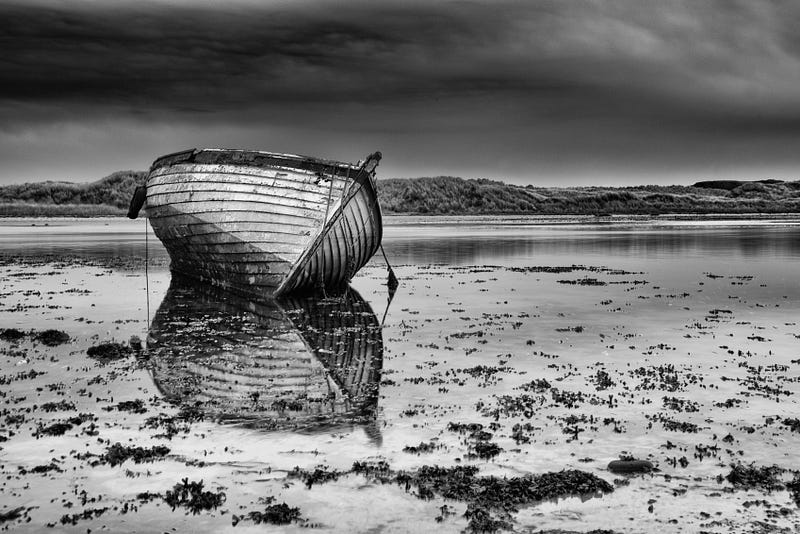
This sonnet has inscribed in me the iconic image of a solitary figure gazing on the fluid border between our hard, brief, sandy, rock-strewn lives and the moving, infinite waters of whatever-is-next. And the words taught me that my peace would only come when I stood there long enough, until the urgency and greed for attainment and enlightenment just… went out with the tide.
John Keats seemed to believe he would miss the chance to give all he could give. He even asked that the epitaph on his gravestone include the fatalistic line, “Here lies one whose name was writ in water.” But here’s the thing: this poem, “When I Have Fears,” survived Keats by a lot. It was not even published until nearly 40 years after his death, and it remains to instruct and illuminate us long after his detractors and his critics are dust.
Write, think, live
I’ve got a pile of books too, filled with years’ worth of the secrets of my soul. But writers need to be read; can you even call it writing if no one sees it? That’s why, at this time in my life, I’m traveling along this electronic shore, sojourning with a community of writers who are yearning to illuminate this life.
We write about thinking. We think about writing. We write to capture mystery and love, although we know that both will be lost one day.
We write because we know we will not live forever.
We write so we will live forever.


 Rev Dr Sparky on Real/igion
Leave a comment