Lessons in the truly ordinary
Why do trucks turn that way? Why are phone menus so aggravating? What makes Möbius strips work? With plenty of complex and consequential issues to think about every day, you might wonder why these small riddles are worth writing about. I wonder that too, but I can’t seem to help myself.
These questions nag at me. I think I’m supposed to learn something from them, but the messages are so obscure, I can’t even Google them. So, determining they must be riddles to solve, I have pondered them, and I think I’m ready to propose some answers. If you already know the real answers, please don’t laugh. Well, do laugh, but please make it a kind little chuckle and not a derisive snort.

Riddle: Why do trucks turn that way?
Why do semis have to swing wide on a right turn, taking up a whole extra lane on their left, but don’t have to swing wide on a left turn? It could be a matter of arithmetic, or physics, or driving, none of which I am very good at. And I am embarrassed at how long it took before I actually noticed the phenomenon. It’s amazing I wasn’t crushed like a soda can years ago.
But once I noticed it, I wondered about it every time I saw a turning semi. Then I’d forget why I was going to the store. See my problem?
Answer: Some changes take up more space than others.
I’ve now decided that the question of how a semi turns is like the question of how we need to approach the necessary turns and changes and choices in our life.
Some turns are easy. For example, switching from baby carrots-and-hummus to avocado toast is like making a left hand turn: easy and efficient. Takes no extra effort; intrudes on nobody else’s lane.
For other turns, we need more space. When we have to change occupations, leave social media, or end a relationship, we might need some room for error as we find our new path. We should be aware that we’ll be swinging wide when we have to make those turns. We should be aware of others, so they don’t get hurt.

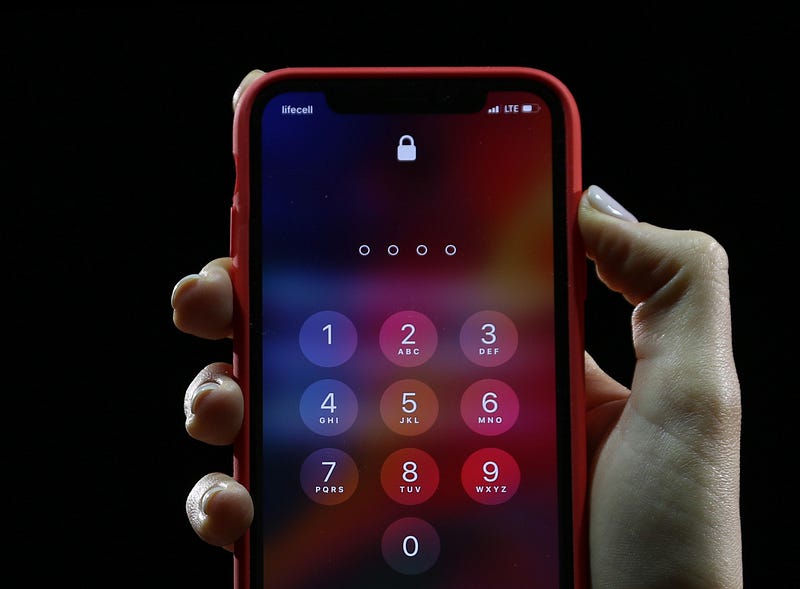
Riddle: Why is it so infuriating that whenever we call a company, their menu “has recently changed”?
It is a known fact that every single automated phone answering system will tell you, “Our menu options have recently changed.”
Every. Single. Time.
Is that all they do? Sit around and change the menus, adding more and more choices, burying the one you want even further down? Are they just trying to wear people out and reduce their call volume? Wouldn’t it be kinder if they just didn’t answer the phone at all? They say my call is important to them, but they can’t even be bothered to pick up the phone and say hello? It’s blatant hypocrisy and it doesn’t fool me for a minute.
There. Rant over. No, wait, one more thing — How come I never know my party’s extension? Who remembers to ask for those extensions? I don’t. Ah, never mind.
Me, I usually just keep shouting “Representative” until the menu shorts out and sends me to a person. If they change that feature, I’ll retaliate and send them a damned letter, and that will take way longer to process. They’ll have to find someone to read it to them.
Answer: We need to change our own menus.
Automated menus are infuriating because they play mindlessly, over and over, regardless of our wishes or our feelings at the time. Almost exactly like the old scripts and habits and negative self-talk that are already running in our heads most of the time. And boy, we’d really like to say those scripts have “recently changed,” and no longer control us, wouldn’t we? But maybe they really haven’t. So our helplessness with the phone menus may feel a lot like our helplessness with the feelings menus we may still be stuck in.
Maybe it’s time to really change our internal scripts. To stretch the metaphor, that will mean finding the original triggers and erasing the old choices, then setting up new ones. There will be a lot of scrolling around, hitting and missing the arrows, getting it wrong and then, maybe, finally getting it right. It would be tedious and time-consuming. But it might be worth it, in the long run.
Until then, we can just keep yelling, “Representative.” Which would at least be better than throwing the phone out the window.
Riddle: How does a Möbius strip turn two sides into one?
When I was introduced to Möbius strips in grade school, I thought they were the coolest things ever. Look! It’s just a regular strip of paper with two sides. But then you twist it once, and glue it, and suddenly it only has one side. And you can prove it because when you draw a line on one side, it meets itself on the other!
And from that day on, I had a lifelong fascination with mathematics that led me to my later accomplishments with theoretical geometry — no, I’m just messing with you. I already told you I wasn’t really good at arithmetic. I didn’t understand Möbius strips then, and I don’t understand them now. In fact, whenever I think of a Möbius strip, I feel a vague anxiety that I have not lived up to my academic potential. Sad that I cannot figure out a simple piece of paper that’s right there in front of me.
Answer: It takes a 180 degree turn, a whole other dimension, and glue.
Möbius strips are as paradoxical as our personalities. Each of has two sides — an outward self and an inner, shadow self. We think they stay separate, and indeed it usually looks as if they do. But it’s sometimes possible to unite those sides, to find some internal harmony. All we have to do is rotate each side’s perspective just right, so that the line can meet itself.
But we can only do this if we are able to step outside ourselves and see things from another perspective. Expanding into that third dimension is the only way we can make the 180 degree twist (or is it a 360 degree twist?) that allows our two sides to meet and marry into one. In the third dimension, we will dance in space, made whole with the glue of understanding.
Sorry. I got a little carried away with that metaphor. But I hope you get the idea. Not all of the riddles or all of the answers lie a million miles away, among the stars. Some of them can be found in any sixth grade classroom. If you have secretly made a Möbius strip while reading this, then you are a true philosopher.

It’s best not to dwell too abstractly on these little questions. We should still give way to that semi that’s making a right turn. We should use live chat whenever possible, rather than telephoning, just on principle. And joining your sunlit side with your shadow side in real life requires time and care and a safe space, of course, so be patient with yourself.
But it’s good to consider these small riddles in between our study of the large ones, like where time goes, or what imaginary lines are good for. Maybe for when you can’t find a pencil.
So I’ll continue collecting these everyday riddles. Perhaps you’ll join me, and let them teach, amuse, and even inspire us.
Like fractals and the chambered nautilus.
Because… what the…?

 Rev Dr Sparky on Real/igion
Leave a comment