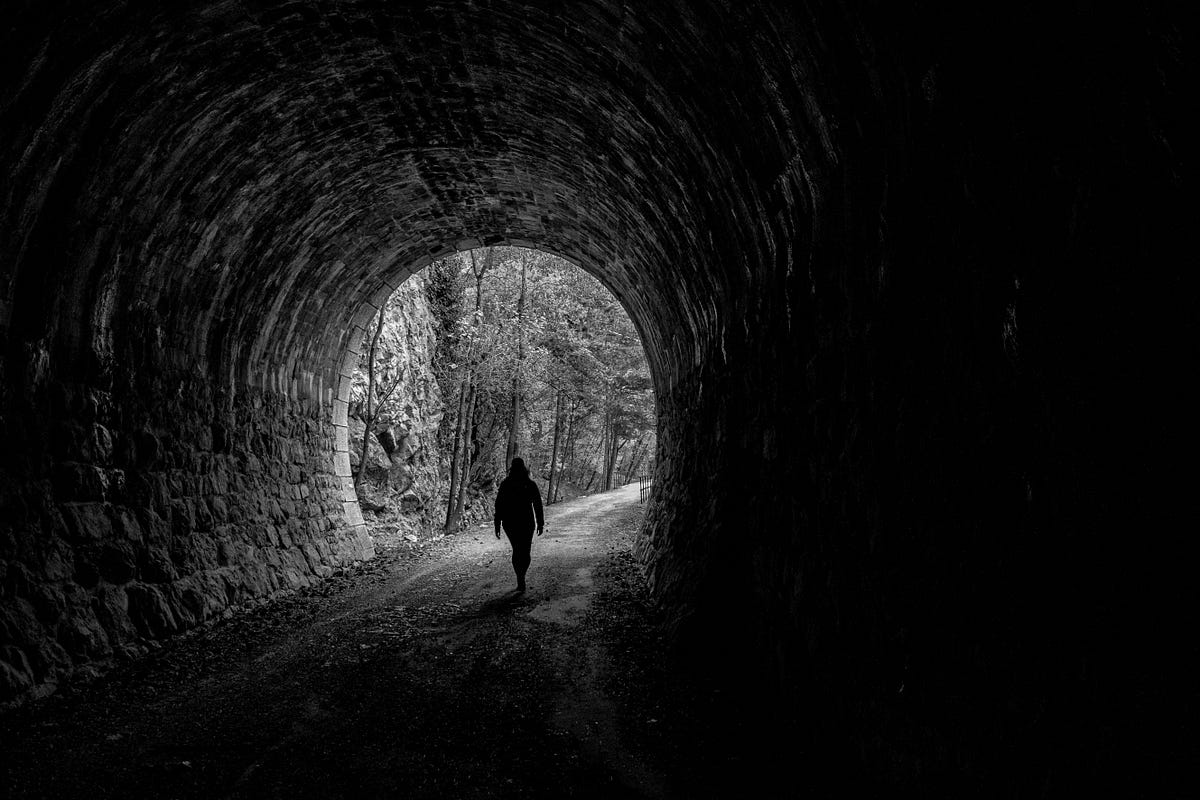
Walk toward it.
We had a fine time at our house the other night watching the iconic 1953 film Invaders from Mars. With our CGI-jaded senses, we giggled at how the “Martian” was basically an actor shown from the neck up wearing a Carmen-Miranda-style headdress, only with tentacles rather than fruit, and the clumsy “mutants” were played by extras in green longjohns that zipped up the back.
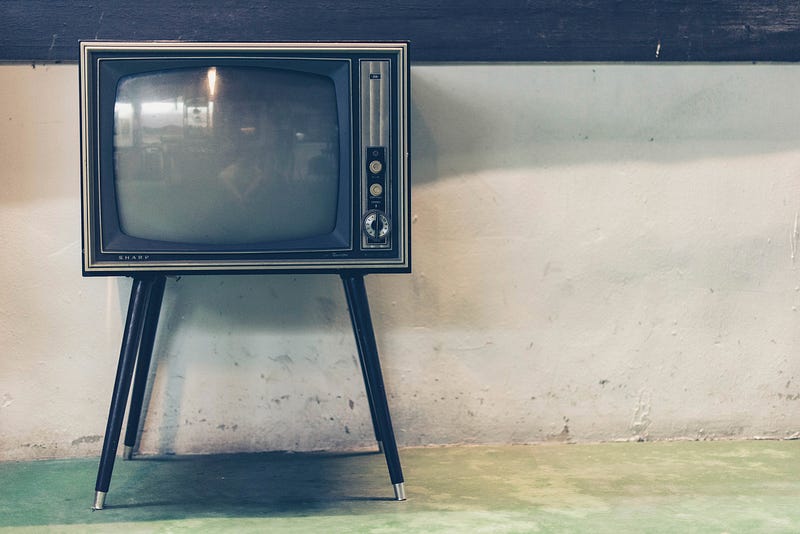
That movie enthralled me as a child, when I would have seen it as a Saturday afternoon re-run on our black-and-white TV set. Twelve-year-old hero David happens to see a flying saucer land and bury itself in the sand pits behind his house. Then, any Earthling who falls into the sand pits gets taken over and sent back topside as a not-at-all-obvious zombie psychopath intent on taking over the world.
David tries to warn the adults, and only the comely Miss Dr. Blake and her gentleman-caller scientist will help him. After a horrifying ordeal, involving a mystifying number of army surplus tanks, David wakes to find it was all a dream — or was it? (Cue eerie music.)
It was a satisfying, heart-pounding movie for a kid on a Saturday afternoon. But of course it’s not a very realistic movie, because it’s certainly not that easy to take over a planet. And yet I could not stop thinking about it. Even though, as I told myself, it’s just a movie.
Red menaces everywhere
Apparently, aliens were flocking to take over America in the 1950s, as illustrated by this and other such film classics as The Day the Earth Stood Still and Invasion of the Body Snatchers. The Invaders represented the Red Menace of communism, a usual Hollywood trope (Mars was the Red Planet, too — get it?), which I suppose explains the tanks.
I internalized the menace just fine, thank you, though somehow I missed the communist bit. I recall when my fourth-grade teacher — Miss Carpenter, I believe her name was — read Karl Marx’s slogan to us: “To each according to his needs; from each, according to his ability.” Ours was a “progressive” private school, we were allowed to comment, so I candidly observed that the arrangement sounded like a good idea to me.
That teacher pointed right at me, looked a warning at the entire class, and said, dead seriously, “This is the kind of person we need to watch out for.”
I wish I could say it was one of those moments that defines a revolutionary. But instead, I just twisted awkwardly in my seat and sulked. Miss Carpenter has certainly passed on by now. I’m not being mean. That’s just a fact.
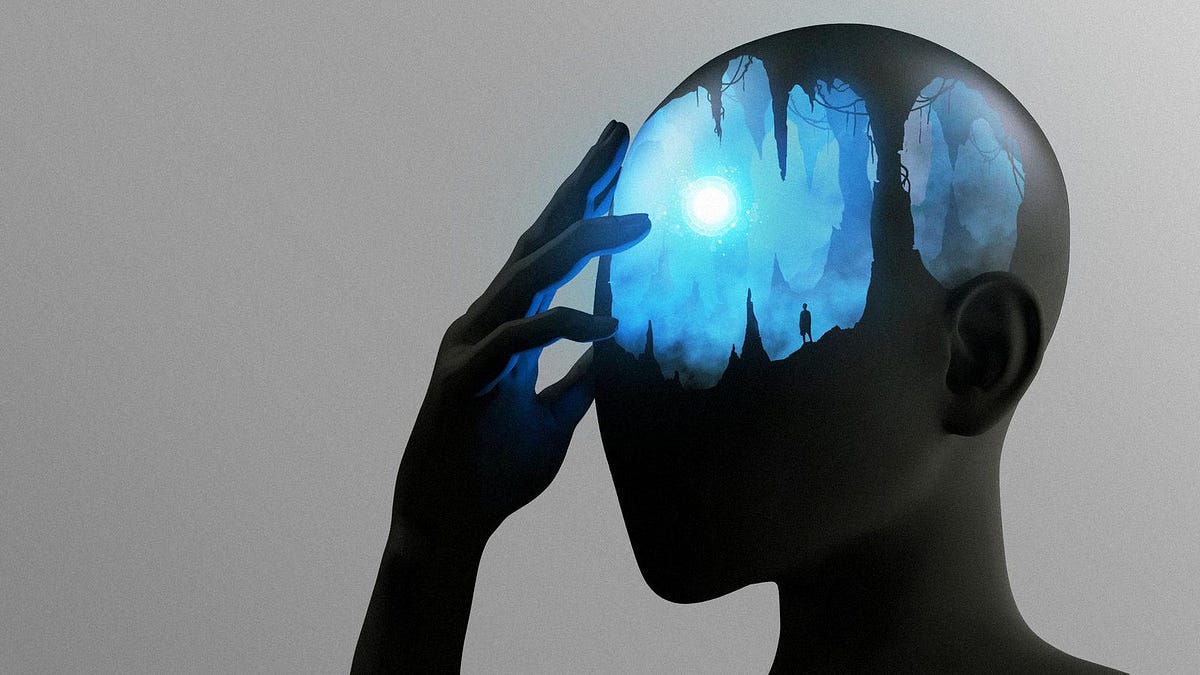
This is my head — keep out
Anyhow, it was the way the Invaders took over your mind that haunted me. They would surgically insert a small crystal into the base of your brain, which would shut down all your real emotions and make you do whatever they wanted you to do.
If you disobeyed, or they had no further use for you, they could kill you by remote control — they’d blow the crystal and you’d collapse like the economy in 2008.
As an energetic child who often was at odds with the grownups around me, I knew firsthand that as long as they are bigger than you are, they win. In addition, I knew that once they get you up on one of those doctor tables, you won’t like what happens next. Like the time when I was three and they held me down for that gas mask and ripped out my tonsils without even asking.
So imagine the scene: I’m a small child watching TV, where an adult woman is being held down on one of those doctor tables. And the aliens are about to drill into her brain with a crystal-tipped drill bit, and they will take over her mind, and make her mean, and probably rip out her tonsils, and she will be in trouble forever. All with very scary music.
Ugh! Still incredibly creepy, after all these years.
Science fiction saves me
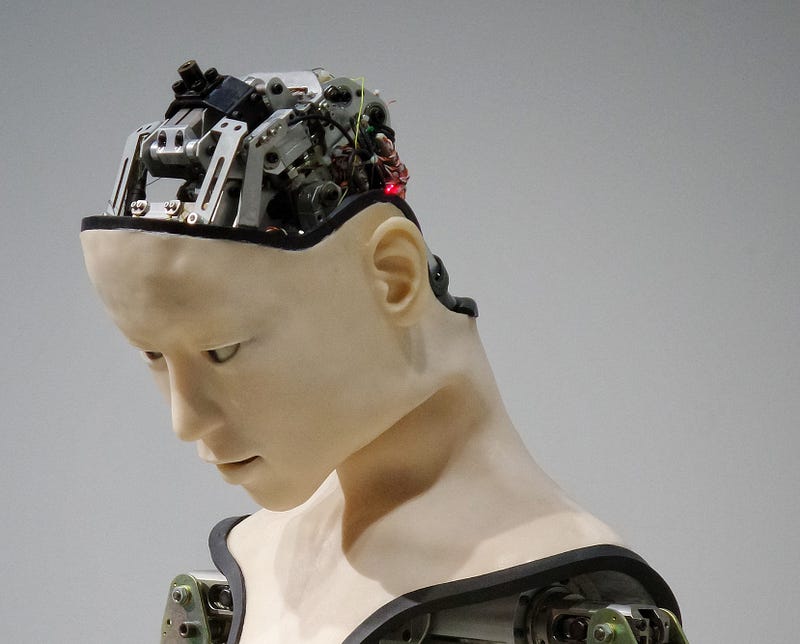
Even though brain surgery with power tools unnerved me, I still needed science fiction and fantasy. Imagination would protect me against becoming an automaton. Sure, I might have to work for the Establishment, but I wouldn’t give in to the Establishment as long as my mind was my own.
But then came an increasingly saturated media environment; information overload; loss of privacy; conspiracies right and left; paradigm shifts a digm-a-dozen — and I could be heard grimly muttering, It’s not paranoia if they really are out to get you, right?
Thank goodness I encountered the Bene Gesserit, the mystical sisterhood created by Frank Herbert in his extraordinary Dune cycle of novels. In Herbert’s saga, the influential Bene Gesserit sisters demonstrate superhuman control of mind-over-body. For example, they can compel obedience with a secret vocal technique known as Voice, which is like a Mom Voice, only turbo-charged.
Crucially, the Bene Gesserit Sisterhood have mastered themselves with a discipline known as the Litany Against Fear.
I am only slightly embarrassed to tell you that when I read this litany as a young adult, I took it as seriously as if Frank Herbert had been my personal executive coach and not a perfect stranger who wrote some random science fiction bestseller. You get me, Dr. Herbert. You really do.
And to this day, when I need to, I recite the Litany again. Here it is:
Fear is the mindkiller. Fear is the little-death that brings total obliteration. I will face my fear. I will permit it to pass over me and through me. And when it has gone past, I will turn the inner eye to see its path. Where the fear has gone there will be nothing. Only I will remain.
Our Möbius strip minds
Experts have suggested that remaining in a chronic state of anxiety actually erodes your ability to think and feel and function properly. I believe this, but I I admit I’m addicted to that alert, head-on-a swivel sensation that adrenaline produces.
It’s a sad, egocentric illusion. Constant fear that others want to steal your ideas or your freedom or your soul simply exhausts the very originality you are trying to protect. Eventually, you start believing that you are still an original because you only wear black or you only use lower case letters. You may find you are unable to understand things you wrote five years ago.
I’d like to see all of us recite the Litany Against Fear daily. I wish I’d remember to do it. Maybe now I will.
It’s all speculative fiction now
Until a few years ago, speculative fiction was still a niche genre cluster that attracted a specialty audience of literary aficionados, intellectuals, nerds, nonconformists, and the like. (You know who you are.)
We believed we were like monks keeping imagination alive during the Dark Ages of the Enlightenment and the Modern Era when reason and cynicism were busy bullying other human ways of knowing into submission. We knew that the literary categories of fact and fantasy have always been elastic and porous, representing hundreds of necessary, interdependent ways of knowing and being human.
Now, the subculture of speculative fiction has exploded into the mainstream, and all you people who were there from the start — myself included — can be heard loudly grumbling, “But we liked it before it was cool. Take off that damned t-shirt, Chad!”
Face it. There was always somebody who was there before you. It behooves us to be more gracious. (I am working on that when it comes to Norse mythology, being part Viking and all. They were gods, not superheroes, for crying out loud.)
Indeed, shouldn’t we welcome the return of the fantastic into the prosaic world that tried to stamp out imagination? Isn’t this proliferation of blockbuster science fiction and magical fantasy franchises proof that American minds have been set free of fear and prejudice? Should we not be grateful that we Americans are now ready to re-enchant our lives?

What you see is not really what you get
Not so fast, I’m afraid. I would love to believe in the re-enchantment of our world. Certainly, the world looks miraculous enough. Electronic media show me miracles; the electronic infrastructure delivers them to my doorstep as if by magic. Voices of minor wizards guide my vehicle. The internet is a modern-day scrying mirror, through which I can see virtually anything in the world.
And I haven’t even touched upon the worlds of online role-playing games, virtual reality or multi-media experiences — because I don’t do any of those things because I am already too easily overstimulated.
Moreover, I do not understand this global electronic enchantment and all of its implications for our minds; no one really does. We ask a constant stream of questions: What is it doing to our sleep? To our empathy? To our relationships? To our attention spans? To our learning abilities? To our very reality?
We don’t know, but we don’t seem to care. Americans spend an average of eleven hours of our lives each day consuming media. Eleven waking hours. Every day. We are in the Matrix, and we’re not coming out.
Like all successful takeovers, by the time you notice it, it’s already happened. Nothing so crude as a crystal to the base of the brain was required.
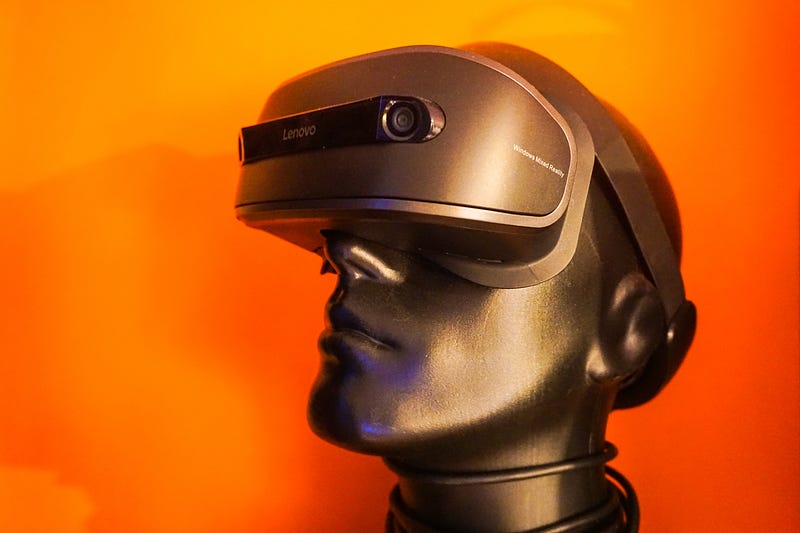
We Americans happily spent $23.3 billion in home entertainment in 2018 to create make-believe universes of our very own. I am one of them, I freely admit, who has felt the profound need to withdraw into a safe and fanciful world of beautiful illusion.
Meanwhile, in 2017, our government probably spent less than half that to alleviate the global climate crisis, but no one really knows for sure.
Eleven years to prevent irreversible climate damage? Oh. See what’s on Netflix.
When I drafted that last paragraph, I found myself frightened all over again, which I found vastly ironic. What the hell, I thought in disgust. So I closed the laptop and went outside, where I’m gradually creating some rambling mulched areas and pathways under the shade trees I prize so much.
I felt the ground solid under my feet — nothing special, just hard earth and leaves.
“Heaven is under our feet as well as over our heads.”
— Henry David Thoreau
We are no longer afraid to face our dreams about space, time, the universe, the magical worlds we conjure with color and light and sound.
But we are afraid to face the future of our actual earth.
And I said the Litany Against Fear.

We have forgotten where we are and who we are
We certainly have dreamed grand and beautiful dreams, standing on this little planet and looking up. We would be travelers to the stars, but we cannot even pick up our trash or keep our oceans from dying.
We say we love “science fiction,” but we do not heed the actual science that is telling us what we must do about the earth’s ecological crisis.
We say we love “magic,” but real magic is connected with the real, living earth. And we have de-personalized our earth for millennia, studiously avoiding her gaze, making of her a thing and not a living being.
It is good to imagine other worlds, other ways of being, other ways of knowing. It’s good for us to care about Westeros and imagine life without combustion engines (apart from a dragon or two). It’s good for us to imagine heroes with disabilities as well as abilities. It’s good for us to keep alive mythologies that would otherwise be forgotten literature. It’s good for us to explore the multiverses of space and time.
But the more we turn toward these worlds, the more we must ask: what are we turning away from? What is it we are afraid to face?
Maybe we are afraid of our own immediate future — we will know, if we are honest.
Maybe we are afraid to face the fate of the earth.
Maybe we are just afraid.
So that’s when we turn off the electronics. Get our hands or feet on something living — soil; tree; animal.
Open the door, face what’s there, and say the Litany Against Fear, because fear really is the mindkiller.
Where the fear has gone there will be nothing.
Only I will remain.
 Rev Dr Sparky on Real/igion
Leave a comment